McKinney TX Foundation Repair
Sinking Foundation Repair in McKinney, TX
A sinking foundation in McKinney is settlement on shrinking clay, fixed with piers that carry the dropped side down to stable soil.
Free estimate
Request a free estimate for sinking foundation repair
Tell us what you are seeing and a crew lead will call to set a same-week inspection in McKinney. No price is quoted until the foundation has been measured.
Prefer the phone?
Call (972) 555-0100Mon to Sat 7am to 7pm
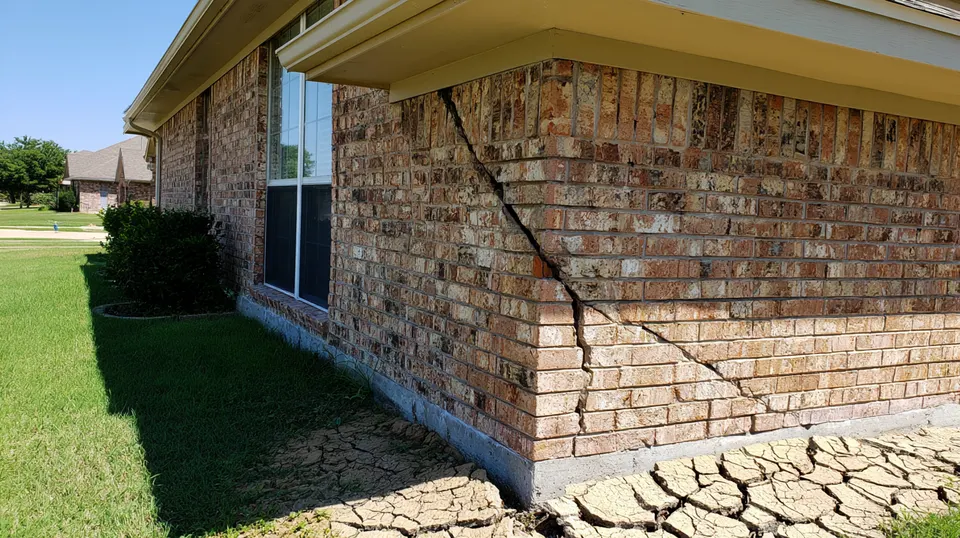
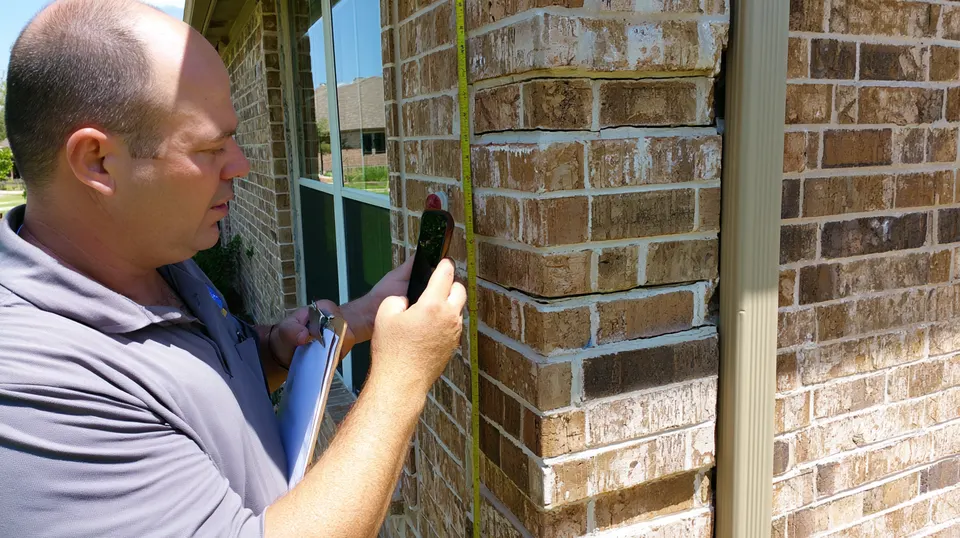
A sinking foundation McKinney homeowners describe as one corner dropping is settlement: the clay under that corner dried, shrank and let the slab drop with it. Sometimes the whole house sinks evenly and nobody notices. Usually it drops on one side, and the cracks, sticking doors and sloping floors show up there. Settlement is the most common reason piers get installed, and a pier is a steel or concrete post driven under the slab to carry its weight down past the moving clay to soil that stays put.
If a wall of your McKinney home has visibly dropped, or a crack in the brick has widened over a single summer, call (972) 555-0100 for a free on-site inspection. The estimate is written, the crews are insured, and every job carries a written warranty.
Signs your McKinney foundation is sinking
- A corner or wall that sits lower than the rest of the house, sometimes visible from the street along the roof line or the brick courses.
- Stair-step cracks in brick that are wider at the top than the bottom.
- A crack across the slab or the garage floor with one side lower than the other.
- Doors and windows that stick along one side of the house.
- Floors that slope toward an outside wall.
- Gaps at the top of interior doors or between the ceiling and the wall on the low side.
- Trim, cabinets or countertops pulling away from the wall.
Sinking foundation McKinney: settling or heaving?
The two look alike and get opposite fixes. Settling means part of the house dropped. Heaving means part of it rose, usually the middle of the slab after a wet stretch or a plumbing leak under the floor, so the edges look low by comparison. Push piers under a slab that is heaving in the center will not help. The tell is the pattern: settlement damage clusters at one corner or along one wall and gets worse in dry weather, while heave shows up as a hump in the interior floor, cracks in the middle of rooms, and doors sticking at the top rather than the side. An inspection with a level survey, where the estimator reads the floor height at points across the house, settles the question before any pier is quoted. If a leak is suspected, the plumbing gets tested first, and a slab leak repair McKinney plumber handles that part before the foundation work starts.
Why McKinney foundations sink
The soil is the reason. The USDA Natural Resources Conservation Service describes the Houston Black series, the classic Blackland Prairie clay that runs from north of Dallas to San Antonio, as 40 to 60 percent clay with high shrink-swell potential that opens cracks one half to four inches wide at a foot deep in dry periods, and says the Heiden series found across Collin County behaves the same way. Texas A&M AgriLife soil scientist Dr. Jake Mowrer, quoted by FOX 7 Austin in 2022, puts it simply: these clays swell when wet and shrink when dry because water slips between microscopic clay layers. When the summer runs dry, the clay under the sunny side of the house shrinks first, and the slab follows it down. The National Weather Service logged only 25.88 inches of rain at DFW Airport in 2011 and 29.31 inches in 2023, against a normal of 37.01, and the Texas Comptroller reports that 2022 was the worst Texas drought after 2011, with about 68 percent of the state in extreme drought that August. Those are the summers that turn a hairline crack into a dropped corner.
What fixing a sinking foundation involves in McKinney
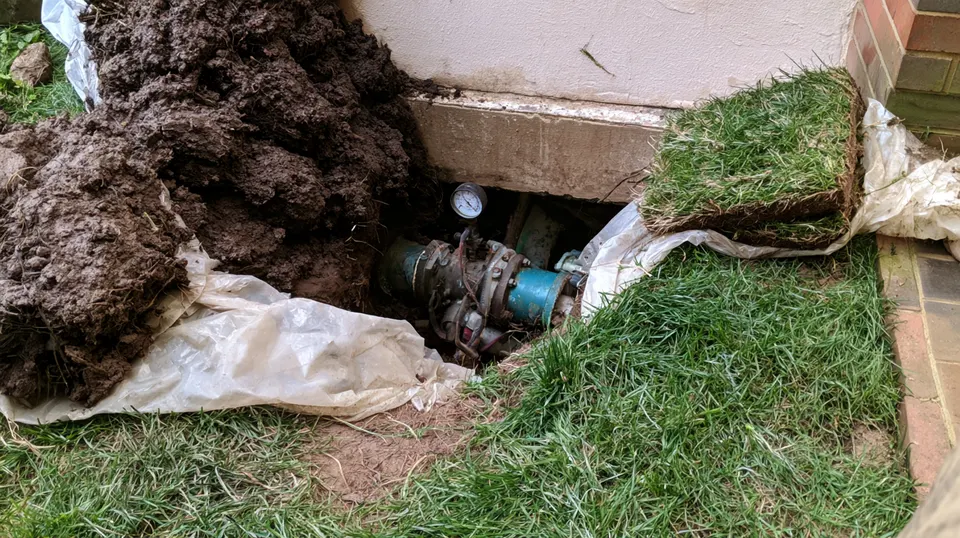
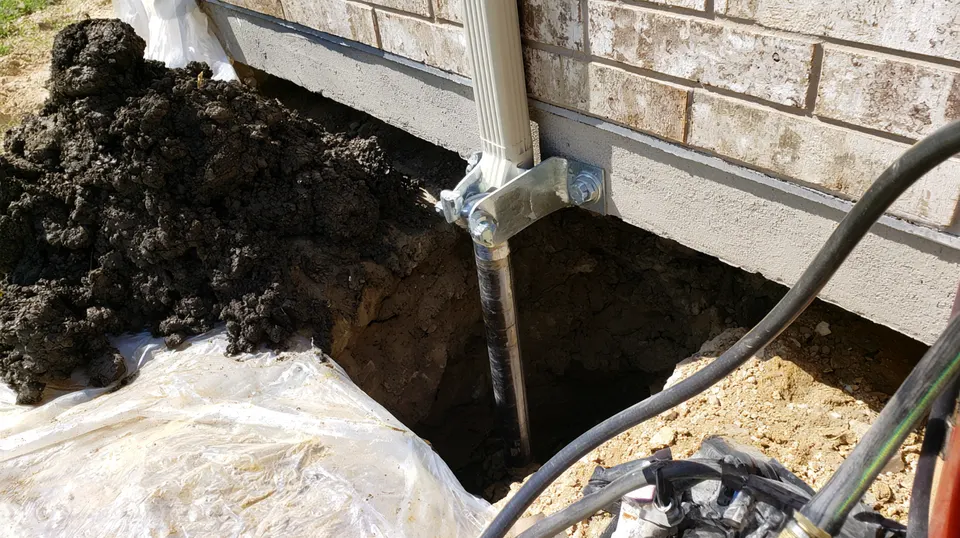
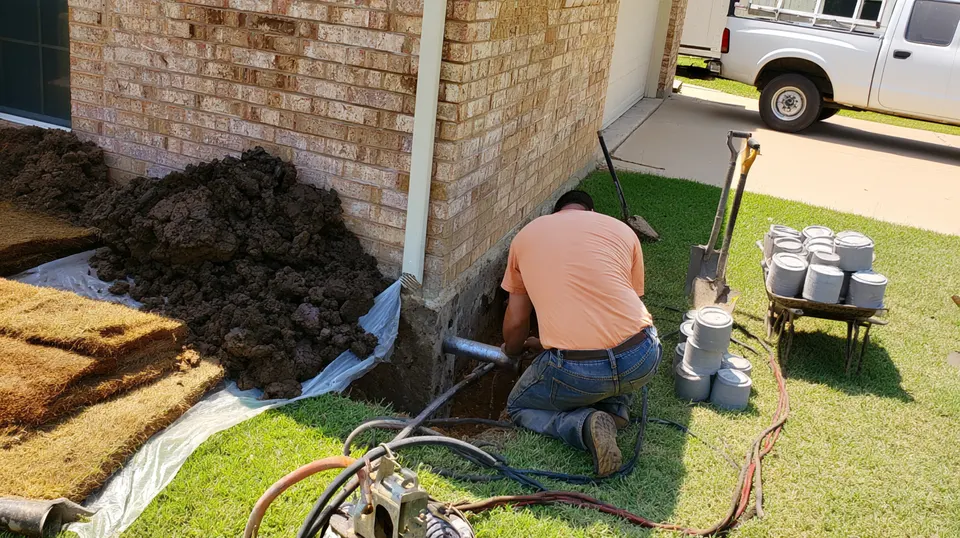
Day one is the engineer’s survey and the digging. The City of McKinney’s Building Inspections guidelines require a permit for any foundation leveling or pier work, with an engineer’s letter and drawings in the application, so the pier layout is drawn before the crew arrives. Holes are opened beside the footing at each pier spot, usually six to eight feet apart along the settled wall. Then the pier goes in: a pressed concrete pier is a stack of concrete cylinders pushed down until it refuses, a steel push pier is a steel pipe pushed deeper by the weight of the house, and a helical pier is screwed in where the structure is too light to push against. Once every pier is seated, jacks on the pier brackets raise the settled side a little at a time until the slab is close to level, the brackets are locked, and the holes are backfilled. The city closes the permit after the engineer’s final report is uploaded to its portal.
Talk to a crew lead about your foundation today.
Call (972) 555-0100What sinking foundation repair costs in McKinney
Fixr, HomeAdvisor, This Old House and Modernize all put a foundation pier at $1,000 to $3,000 in their 2026 guides, and Modernize splits that into about $1,000 for pressed concrete, about $2,000 for steel push and about $3,000 for helical. The total depends on the count: Fixr’s 2026 guide puts a full underpinning job at $10,000 to $40,000, while HomeAdvisor’s 2026 guide gives $2,225 to $8,133 as the typical range for foundation repair of all kinds, with a $5,174 average.
What it costs
$1,000 to $3,000
Fixr 2026 national range, per pier, steel, concrete or helical.
$1,000 to $3,000
HomeAdvisor 2026 national range, per pier, piering or underpinning.
What moves the number in McKinney: pier type (pressed or segmented concrete vs steel push vs helical), number of piers (spacing typically 6 to 8 feet along the affected perimeter), depth to load-bearing strata, interior piers requiring tunneling or slab breakouts, hydraulic lifting after installation, engineer's report and warranty.
All four guides agree on $1,000 to $3,000 per pier. Modernize is the only guide that splits by type, placing segmented or pressed concrete piers near $1,000, steel push piers near $2,000 and helical piers near $3,000. Pressed concrete piers, the most common method in North Texas, are the cheapest tier.
Estimates are free, written, and itemized. No price is quoted before someone has measured the foundation.
Those are national ranges, not our prices; the written estimate shows the pier count and the price per pier.
Related services
The foundation piers page compares the three pier types and when each fits. Piers are usually one part of a larger slab foundation repair that may also include crack sealing and drainage. If you are not sure whether the house is settling or heaving, book a foundation inspection first. The foundation repair cost page walks through the whole estimate, including the engineer’s letter and the permit.
A dropped corner does not come back up on its own, and each dry summer takes it a little lower. For a sinking foundation McKinney homeowners can get lifted and held under a written warranty, call (972) 555-0100. The inspection is free, the estimate is written, and same-week scheduling is available.
Questions homeowners ask
How can I tell if my foundation is sinking or heaving?
Settlement damage clusters at one corner or along one wall and gets worse in dry weather. Heave shows as a hump in the interior floor, cracks in the middle of rooms and doors sticking at the top. A level survey during the inspection settles it before any pier is quoted.
How fast does a sinking foundation get worse?
It follows the weather. A dry summer shrinks the clay and drops the settled side further, and a wet winter may bring some of it back. There is no fixed rate, which is why the inspection reads the floor heights rather than guessing.
Do I need an engineer for a sinking foundation in McKinney?
Yes. The City of McKinney requires an engineer's letter and drawings with the permit application for any pier or leveling work, and the work must be engineered by a licensed professional registered in Texas. The permit closes after the engineer's final report is uploaded.
Which pier is best for a sinking slab?
It depends on the weight of the house and the soil. Pressed concrete piers cost the least and hold well under lighter homes, steel push piers go deeper under heavier ones, and helical piers screw in where the structure is too light to push against. The engineer's letter names the type.
What does it cost to fix a sinking foundation?
Fixr, HomeAdvisor, This Old House and Modernize all put a pier at $1,000 to $3,000 in their 2026 guides, and Fixr puts a full underpinning job at $10,000 to $40,000. The total depends on the pier count. The on-site estimate is free and written.
Sources for local facts on this page
- USDA NRCS, Houston Black Texas State Soil fact sheet (hosted by Texas Water Development Board), 2026
- USDA NRCS Official Series Description, Houston Black series, 2026
- USDA NRCS Official Series Description, Heiden series, 2026
- FOX 7 Austin, Texas drought may be impacting your home's foundation, Aug 2, 2022
- National Weather Service Fort Worth, DFW Monthly and Annual Precipitation, 2026
- National Weather Service Fort Worth, DFW Annual Normals, Means and Extremes, 2021
- Texas Comptroller of Public Accounts, Fiscal Notes, Drought in Texas, December 2022
- City of McKinney Building Inspections, General Guidelines for Foundation Repair, accessed Sep 2026
Free estimate
Get a free written estimate for sinking foundation repair
A crew lead measures the foundation, explains what is moving and why, and hands you an itemized estimate you keep.
Call (972) 555-0100Mon to Sat 7am to 7pm