McKinney TX Foundation Repair
Cracks in Brick in McKinney, TX
Stair-step and widening cracks in brick veneer are the most visible sign of slab movement on McKinney homes, and this page explains what they mean and how they are fixed.
Free estimate
Request a free estimate for cracks in brick
Tell us what you are seeing and a crew lead will call to set a same-week inspection in McKinney. No price is quoted until the foundation has been measured.
Prefer the phone?
Call (972) 555-0100Mon to Sat 7am to 7pm
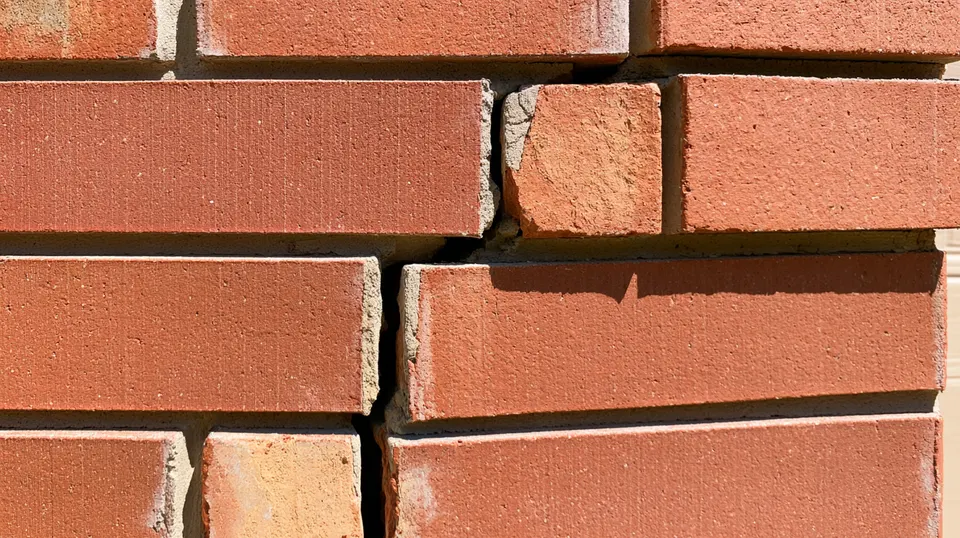
Cracks in brick McKinney homes develop when the slab under a wall moves and the brick above it cannot stretch to follow. Brick veneer is the single layer of brick on the outside of a wood-framed wall. It is stiff, so when one corner of the house drops even a fraction of an inch, the veneer breaks along the mortar joints, the soft lines of cement between each brick. This page explains which cracks are cosmetic, which point to slab movement, and what a proper repair involves.
If you have found a fresh crack, one that keeps widening, or a gap you can slide a coin into, call (972) 555-0100. Estimates are free and written, and same-week inspections are available. Good foundation crack repair in McKinney starts with a level survey of the floor, not a tube of caulk.
Signs the brick cracks on your McKinney home are foundation related
- Stair-step cracks that follow the mortar joints diagonally up from the corner of a window or door
- A crack that is wider at the top than at the bottom, which usually means that corner of the slab has dropped
- Any crack wider than a quarter inch, or a crack you patched that has opened again
- A gap between the brick and a window frame, garage door frame, or the corner trim
- Brick pulling away from the frieze board, the trim board just under the roof line
- Cracks on two sides of the same corner
- A separation or crack along the slab edge where the brick meets the concrete at the ground
A few hairline cracks after a new home’s first dry summer are common. A pattern that grows each dry season is the one worth measuring.
What causes cracks in brick McKinney homes
The soil is the reason. The USDA Natural Resources Conservation Service describes the Houston Black series, the Texas state soil, as 40 to 60 percent clay with high shrink-swell potential, opening cracks 1/2 to 4 inches wide at 12 inches deep during dry periods. The Heiden series, another widespread Blackland Prairie clay in Collin County, is also 40 to 60 percent clay and cracks the same way in the NRCS description. When that clay dries, it shrinks and the slab edge settles into the gap. The NRCS fact sheet notes that water enters this soil rapidly when it is dry and cracked, so the first heavy rain swells it back up. The house rides that cycle, and the brick, which has no give at all, cracks.
Rainfall swings make it worse. The National Weather Service puts normal annual rainfall at DFW Airport at 37.01 inches, yet only 25.88 inches fell in 2011 and 29.31 inches in 2023, against 62.61 inches in the record wet 2015. The summer of 2023 brought just 1.25 inches from June through August. Dry stretches like those are when most brick cracks in McKinney open.
The Texas Section of ASCE notes that most Texas foundations are shallow slab-on-ground slabs, many placed on expansive clay, so a brick crack here is a slab question first and a masonry question second.
What repairing brick cracks involves in McKinney
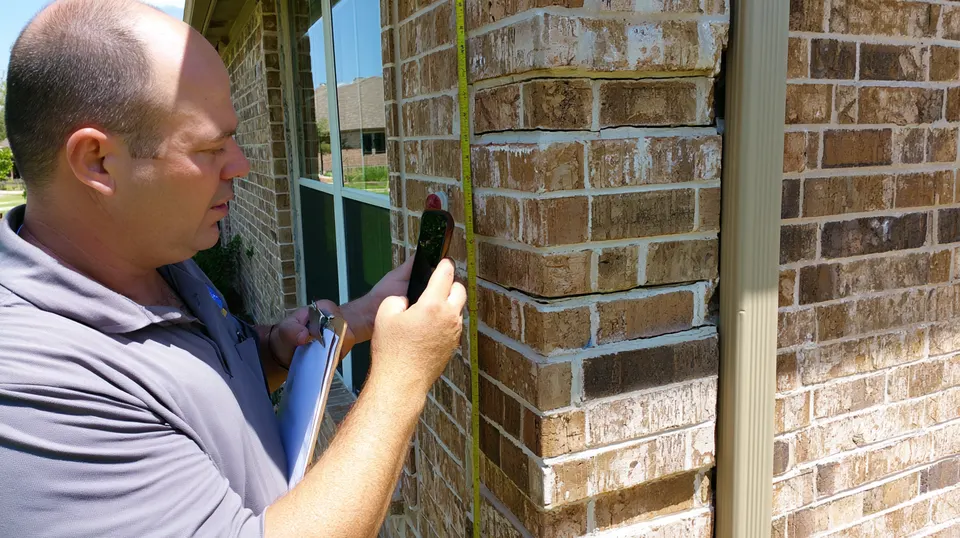
On day one a crew lead walks the outside, maps every crack with its width and direction, and takes floor elevations with a zip level, a tool that measures how far each part of the floor sits above or below a reference point. That shows whether a corner has dropped and by how much.
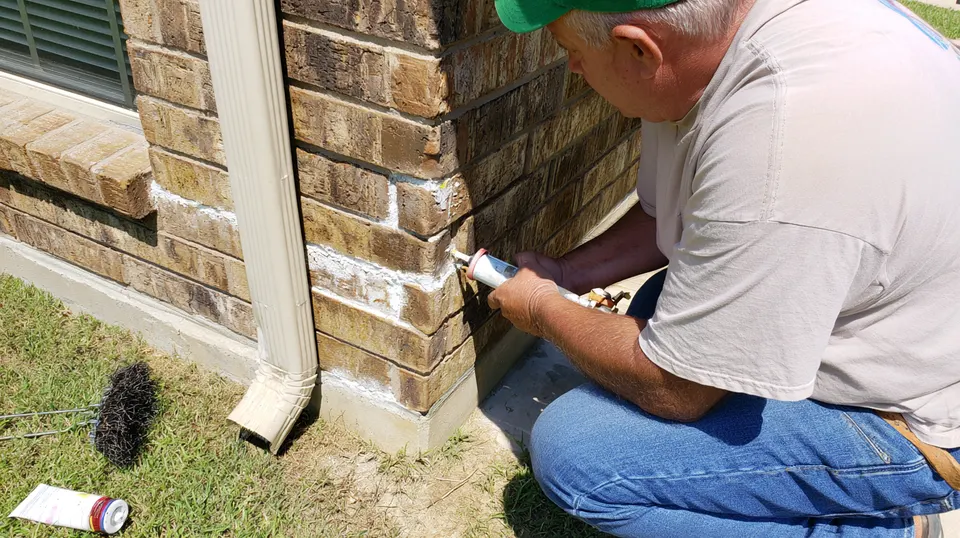
If the elevations show a dropped corner, the fix is underpinning. Piers, which are steel or pressed concrete posts driven under the slab edge to carry its weight down to stable soil, are installed along the affected wall, usually one every 6 to 8 feet. Hydraulic jacks then lift the slab on those piers until it is as close to level as it will safely go, which closes the crack most of the way. Once the slab is stable, the masonry is repaired. Cracked mortar joints are ground out and repointed, meaning packed with fresh mortar, and broken bricks are cut out and replaced with matching units.
If the elevations are flat and the cracks are small, no piers are needed. The masonry gets repaired and the estimate will suggest foundation watering or drainage changes so the soil stays at a steadier moisture level.
The City of McKinney Building Inspections office requires a permit for any foundation leveling or pier work, and the application must include an engineer’s letter and drawings showing the affected areas. The permit closes only after the engineer’s final report is uploaded to the city’s portal. Repointing mortar by itself does not need that permit. Lifting the slab does, and the contractor files it.
Talk to a crew lead about your foundation today.
Call (972) 555-0100What repairing brick cracks costs in McKinney
For the masonry side, Fixr’s 2026 foundation repair guide puts crack sealing at $200 to $1,000 per job, and HomeAdvisor’s 2026 guide puts it at $250 to $800. If the slab has dropped and piers are needed, Fixr, HomeAdvisor, This Old House and Modernize all put a pier at $1,000 to $3,000 in their 2026 guides, so a wall that needs six piers lands well above the crack-only figures.
What it costs
$200 to $1,000
Fixr 2026 national range, crack sealing or epoxy injection.
$250 to $800
HomeAdvisor 2026 national range, crack sealing with epoxy or polyurethane.
What moves the number in McKinney: crack width and whether it is cosmetic or structural, number of cracks, injection material (epoxy vs polyurethane), whether the crack is leaking water, whether settlement is the root cause (piers would be needed instead).
Surface crack sealing runs $200 to $1,000 across all guides. Structural injection of a leaking crack is priced separately at $800 to $1,500 per crack by This Old House and HomeAdvisor, so the per-crack cost depends heavily on whether water is coming through.
Estimates are free, written, and itemized. No price is quoted before someone has measured the foundation.
Your written estimate separates the pier count from the masonry work so you can see what each part of the job costs before anyone starts.
Related services
Brick cracks rarely travel alone. If there are cracks in the slab itself, the foundation crack repair page covers epoxy and polyurethane injection. A full foundation inspection with a level survey is the right first step when you are not sure whether the wall has moved. Lifting a dropped corner falls under slab foundation repair, and keeping the clay from drying out again is what foundation watering and foundation drainage are for.
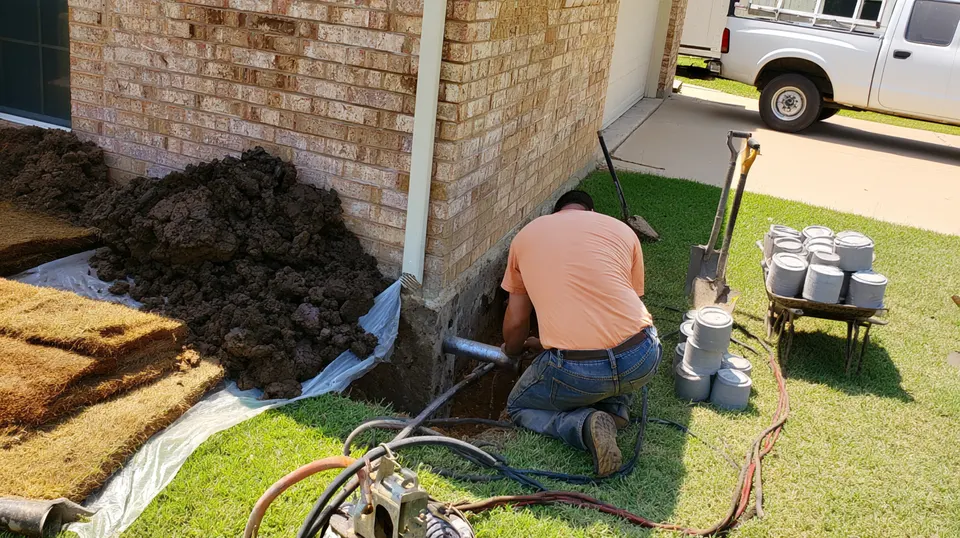
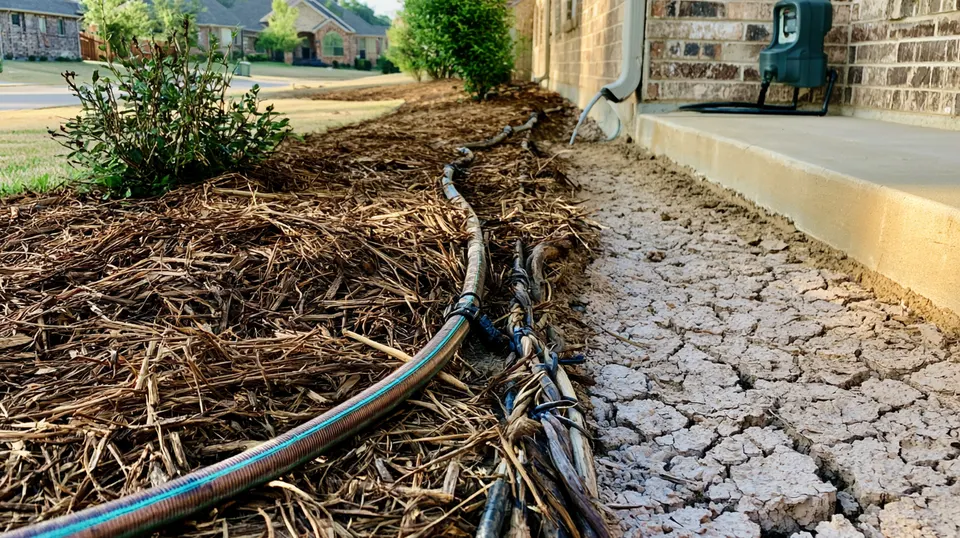
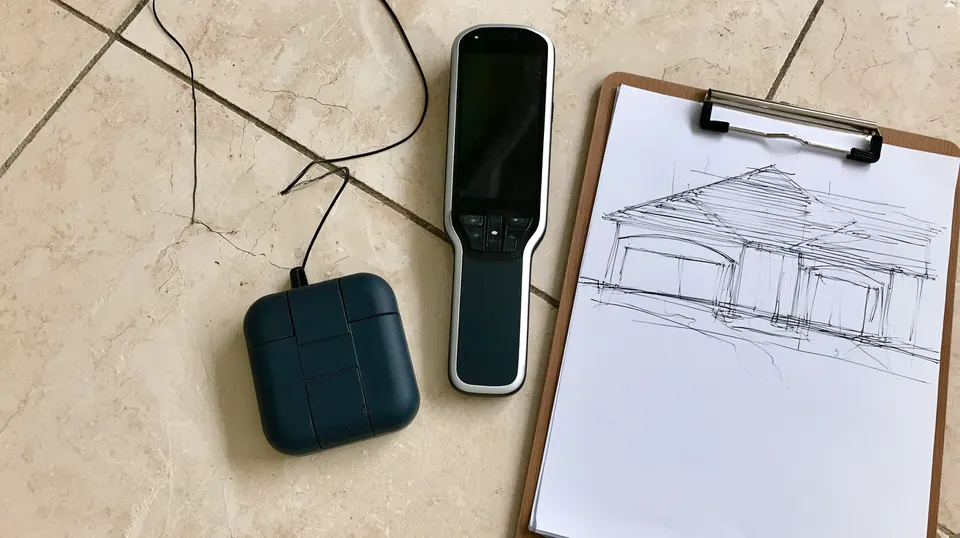
Most cracks in brick McKinney homeowners find are the slab talking, and the clay under the slab is what sets it moving. A free on-site estimate tells you whether the cracks are cosmetic or a corner has dropped, and it puts the pier count and the masonry repair in writing. Every job carries a written warranty and crews are insured. Call (972) 555-0100 to schedule a same-week inspection.
Questions homeowners ask
Are cracks in brick always a foundation problem?
No. A few hairline cracks in mortar after a home's first dry summer are common and usually cosmetic. A pattern of stair-step cracks that grows each dry season, or a crack wider than a quarter inch, usually points to slab movement and should be measured with a level survey.
Can I just fill the cracks in my brick?
You can, but if the slab is still moving the crack will open again. The right order is to check floor elevations first, stabilize the slab if it has dropped, and then repair the mortar and brick. Fixing the masonry first wastes money.
Why do brick cracks show up in late summer in McKinney?
The clay under McKinney shrinks when it dries and pulls support away from the slab edge. The National Weather Service recorded just 1.25 inches of rain at DFW Airport from June through August 2023, and dry stretches like that are when most brick cracks open.
Do I need a permit to fix cracks in brick?
Repointing mortar or replacing a few bricks does not require a foundation permit. Lifting the slab with piers does. The City of McKinney requires a permit and an engineer's letter for any foundation leveling or pier work, and the contractor handles that paperwork.
Will the cracks close after the slab is lifted?
Often they close most of the way, but not always completely. Brick that has shifted can bind, and mortar that has broken away will not knit back together. After the lift, the cracked joints are ground out and repointed so the wall looks and sheds water like it should.
Sources for local facts on this page
- USDA NRCS Official Series Description, Houston Black series, 2026
- USDA NRCS Official Series Description, Heiden series, 2026
- USDA NRCS, Houston Black Texas State Soil fact sheet, 2026
- National Weather Service Fort Worth, DFW Annual Normals, Means and Extremes, 2021
- National Weather Service Fort Worth, DFW Monthly and Annual Precipitation, 2026
- Texas Section ASCE, Recommended Practice for the Design of Residential Foundations, Version 2, adopted Oct 4, 2007
- City of McKinney Building Inspections, General Guidelines for Foundation Repair, accessed Sep 2026
Free estimate
Get a free written estimate for cracks in brick
A crew lead measures the foundation, explains what is moving and why, and hands you an itemized estimate you keep.
Call (972) 555-0100Mon to Sat 7am to 7pm