McKinney TX Foundation Repair
Commercial Foundation Repair in McKinney, TX
Light commercial buildings on slab in McKinney, from retail pads to churches and warehouses, move on the same clay as houses and get piers, drainage and an engineer's plan.
Free estimate
Request a free estimate for commercial foundation repair
Tell us what you are seeing and a crew lead will call to set a same-week inspection in McKinney. No price is quoted until the foundation has been measured.
Prefer the phone?
Call (972) 555-0100Mon to Sat 7am to 7pm
Commercial foundation repair McKinney property owners need most often is for light commercial buildings on a concrete slab: retail pads, small office buildings, churches, and small warehouses. These buildings sit on the same shrink-swell clay as the houses around them, but they carry heavier loads at columns, span longer distances, and are ringed by pavement and roof drains that push water at the slab edge. This page explains what repair involves for a McKinney building and what to expect on cost.
If a tenant is reporting cracked tile, doors that will not latch or a step in the slab, call (972) 555-0100. On-site estimates are free and written, and same-week scheduling is available.
Signs a McKinney commercial slab is moving
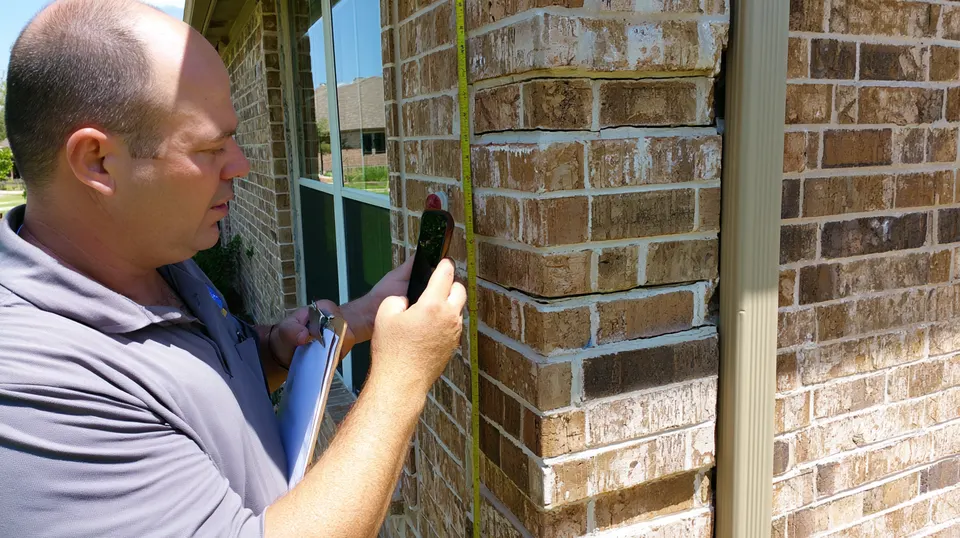
- Stair-step cracks in brick or block veneer climbing from window and door corners
- Storefront glass doors that drag, will not latch, or show a wedge-shaped gap at the header
- A crack across the slab that shows through tile or polished concrete, often along a column line
- Cracked drywall at interior door corners or gaps at the top of partition walls
- A visible slope in a hallway or sales floor, or a lip where two slab sections meet
- Separation between the slab and a covered walkway, sidewalk or loading dock
Several of these on one side of the building, worsening through a dry summer, is the pattern that warrants an elevation survey.
What commercial foundation repair McKinney work involves
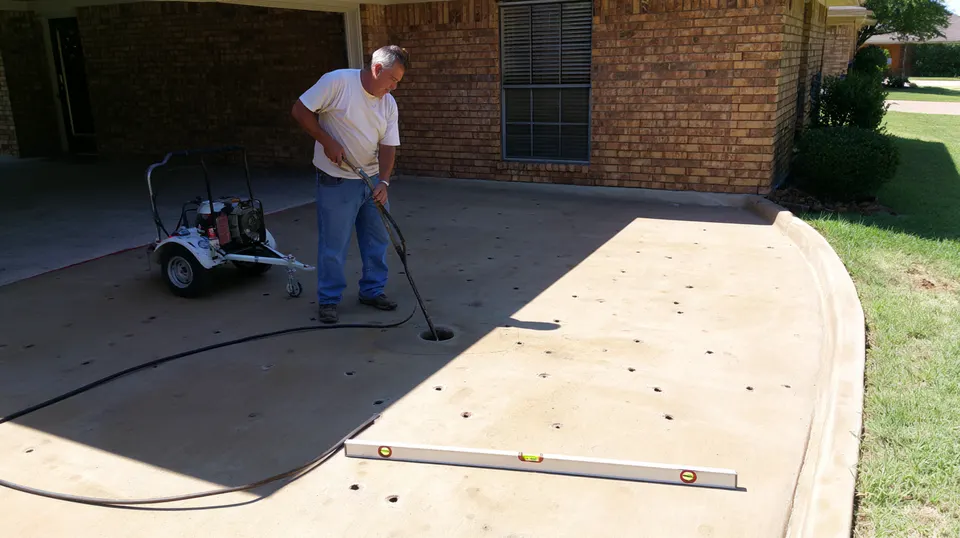
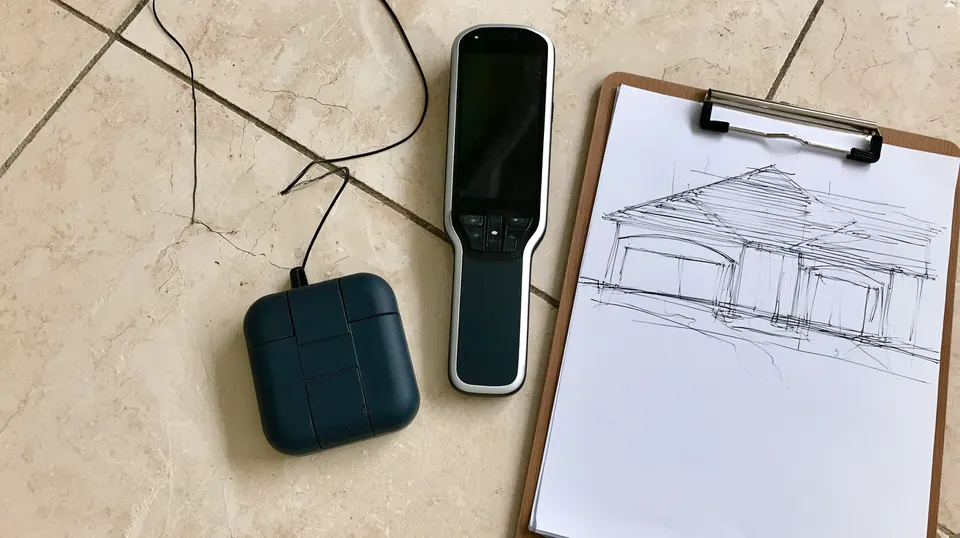
Day one is measurement. A crew lead takes floor elevations across the building with a zip level or laser level, a tool that shows how far each point sits above or below a reference, and maps cracks inside and out. That map goes to the engineer, who decides where piers go and how many.
The reason the map matters is the soil. The USDA Natural Resources Conservation Service describes the Houston Black series, the Texas state soil, as 40 to 60 percent clay with very high shrink-swell potential and notes that in metropolitan areas that potential is commonly a limitation for building site development. The clay takes water rapidly when it is dry and cracked. A commercial slab with a parking lot draining toward one edge and a dry landscape bed on the other is sitting on soil that moves differently at each end.
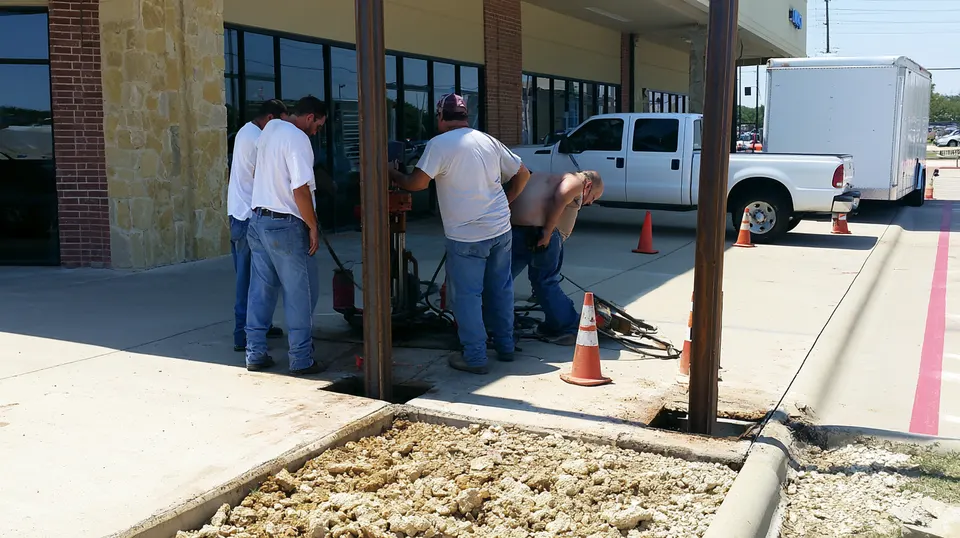
Once the plan is set, exterior piers go in through small excavations at the slab edge. Interior piers, where a column has settled, are reached by cutting a small opening in the slab or tunneling from the perimeter. Hydraulic jacks then lift the slab toward the engineer’s target elevations and the openings are patched.
Work can be staged so the building stays open: perimeter piers go in from outside, and interior work can be done in sections or after hours. Say which hours matter during the estimate.
Helical piers and drainage for light commercial slabs
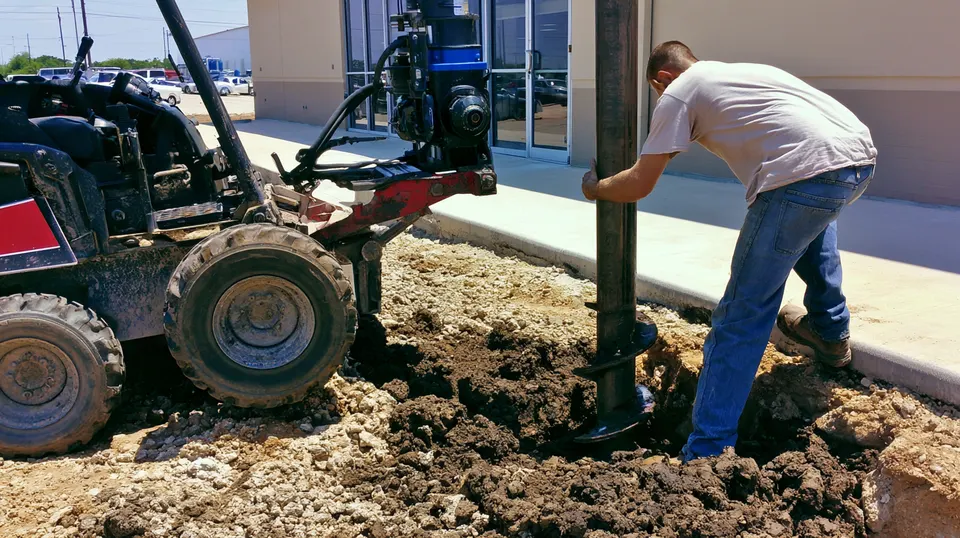
A helical pier is a steel shaft with screw-shaped plates welded near the tip. A hydraulic drive head turns it into the ground until the torque reaches the value the engineer specified. Torque correlates with load capacity, so each pier comes with a number attached, which is why engineers favor them for column loads. They carry load as soon as they are installed, produce little vibration, and can be placed with low-headroom equipment inside a building. Modernize’s 2026 guide places helical piers near $3,000 each, against about $2,000 for steel push piers and about $1,000 for pressed concrete piers, so the engineer’s pier count is the biggest single driver of a commercial estimate.
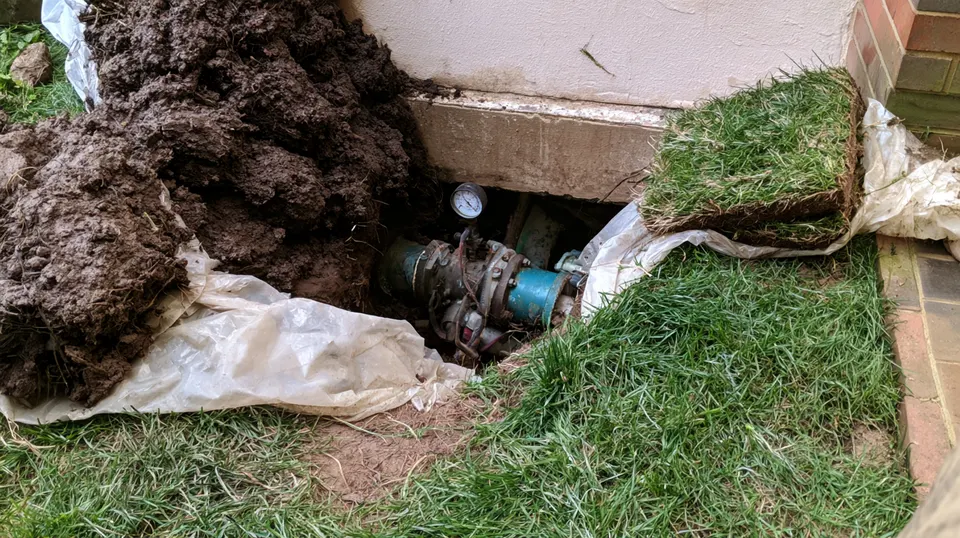
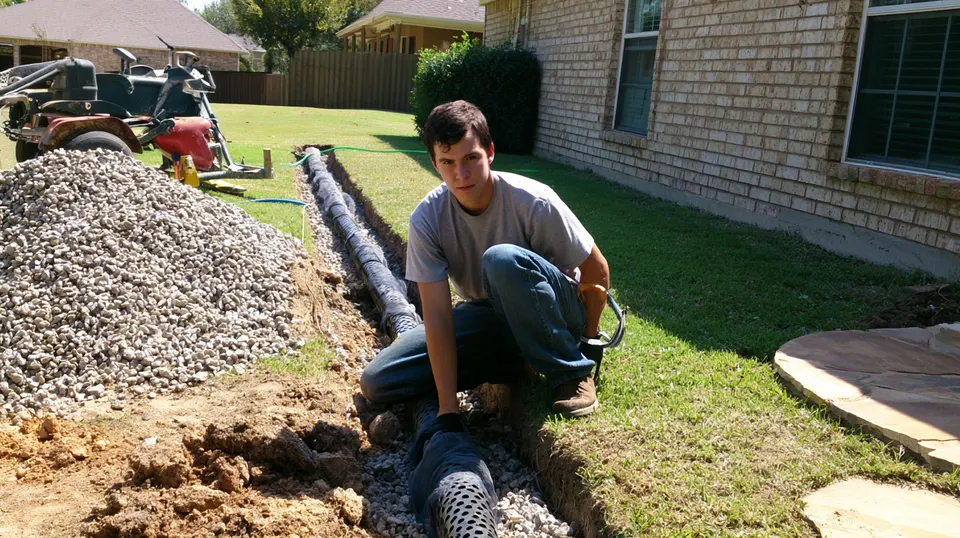
Drainage is the second half of the job. Commercial sites concentrate water: acres of parking lot pitched toward the building, roof drains that discharge at the slab edge, and irrigated beds against the wall. DFW Airport saw 62.61 inches of rain in 2015 and 29.31 inches in 2023 per the National Weather Service, and a slab that sees both extremes will move unless water is managed. Fixes include regrading, extending downspouts and roof drains to a storm inlet, and a French drain, which is a gravel trench with a perforated pipe that collects water and carries it away from the slab. Modernize’s 2026 guide puts exterior drainage installation at $1,500 to $4,000.
Engineer involvement and city permits
The Texas Section of ASCE recommends that foundations on expansive clay be engineered by a Texas-licensed engineer, and repair follows the same logic. The City of McKinney Building Inspections office requires a permit for any foundation leveling or pier work and asks for an engineer’s letter and drawings showing the affected areas and whether plumbing needs testing. The permit closes only after the engineer’s final report is uploaded to the city’s portal. On a commercial job the engineer’s plan also becomes the basis of the written warranty, because it records pier locations and target elevations.
Talk to a crew lead about your foundation today.
Call (972) 555-0100What commercial foundation repair costs in McKinney
Published guides price residential work, so treat them as a floor. Fixr’s 2026 foundation repair guide puts a whole underpinning job at $10,000 to $40,000 and a single pier at $1,000 to $3,000, and HomeAdvisor’s 2026 guide agrees on the per-pier figure. A commercial estimate is built from the engineer’s pier count, the drainage scope and the staging the business needs.
What it costs
$2,200 to $8,200
Fixr 2026 national range, national average and typical range for all repair types; $1.50 to $12 per square foot, typical $5,200.
$2,225 to $8,133
HomeAdvisor 2026 national range, national average and typical range; low end $500, high end $16,000, typical $5,174.
What moves the number in McKinney: type and severity of damage (cracks vs settling vs bowing), foundation type (slab, pier and beam, crawl space, basement), number and type of piers required, soil conditions and need for a geotechnical report, access, landscaping and concrete removal, structural engineer's report and permits.
All four guides cluster tightly around a $5,000 to $5,200 national average and a $2,200 to $8,400 typical range. HomeAdvisor and This Old House publish nearly identical figures, which suggests a shared underlying dataset. Modernize's high end is slightly wider at $8,400.
Estimates are free, written, and itemized. No price is quoted before someone has measured the foundation.
Your written estimate itemizes piers, drainage and engineering so the owner and the tenant can each see what they are paying for.
Related services
The helical piers page goes deeper on torque, capacity and where they beat pressed concrete. Settled sidewalks, loading aprons and parking slabs are handled with concrete leveling, which lifts a slab by injecting material under it rather than piering it. Site water is covered under foundation drainage, and a foundation inspection is the right first call when you only have a tenant’s complaint and no measurements yet.
Commercial foundation repair McKinney owners schedule through this site starts with a free elevation survey, runs through an engineer’s plan and city permit, and ends with a written warranty on the piers. Crews are insured, and the work is staged around your hours. Call (972) 555-0100 to set up an on-site estimate for your building.
Questions homeowners ask
What counts as light commercial foundation repair?
Single-story or two-story buildings on a concrete slab: retail pads, small office buildings, churches, daycare and medical suites, and small warehouses. Large multistory or heavy industrial structures need a geotechnical and structural design team and are outside the scope of this page.
Why are helical piers common on commercial slabs?
A helical pier is a steel shaft with screw plates turned into the ground by a hydraulic motor. The torque needed to install it correlates with its load capacity, so the engineer gets a measured number for each pier, and the piers can carry load immediately with little vibration.
Can the business stay open during the work?
Often yes. Perimeter piers are installed from outside, interior piers can be staged in sections, and work can be scheduled around business hours. Say what hours matter during the estimate so the plan is built around them.
Does McKinney require an engineer for commercial foundation repair?
Yes. The City of McKinney requires a permit for any foundation leveling or pier work, with an engineer's letter and drawings in the application, and it closes the permit only after the engineer's final report is uploaded. The contractor coordinates that with the engineer.
Is drainage really part of a foundation repair?
On commercial sites it usually is. Parking lots, roof drains and landscape beds concentrate water at the slab edge, and the clay under McKinney swells when it gets it. Piers stabilize the building; drainage keeps the soil from repeating the movement.
Sources for local facts on this page
- USDA NRCS, Houston Black Texas State Soil fact sheet, 2026
- USDA NRCS Official Series Description, Houston Black series, 2026
- Texas Section ASCE, Recommended Practice for the Design of Residential Foundations, Version 2, 2007
- City of McKinney Building Inspections, General Guidelines for Foundation Repair, accessed Sep 2026
- National Weather Service Fort Worth, DFW Monthly and Annual Precipitation, 2026
Free estimate
Get a free written estimate for commercial foundation repair
A crew lead measures the foundation, explains what is moving and why, and hands you an itemized estimate you keep.
Call (972) 555-0100Mon to Sat 7am to 7pm