McKinney TX Foundation Repair
Foundation Piers in McKinney, TX
Steel or concrete posts installed under a settled McKinney slab to carry the house past the shifting clay to stable soil, then lift it back toward level.
Free estimate
Request a free estimate for foundation piers
Tell us what you are seeing and a crew lead will call to set a same-week inspection in McKinney. No price is quoted until the foundation has been measured.
Prefer the phone?
Call (972) 555-0100Mon to Sat 7am to 7pm
Foundation piers McKinney contractors install are steel or concrete posts placed under the edge of a settled slab to carry the weight of the house down past the shifting clay to soil that stays put. A pier does two things: it holds the slab at a depth where seasonal wetting and drying no longer move it, and it gives the crew a fixed point to jack the house back toward level. If your McKinney home has stair-step cracks in the brick, doors that no longer latch, or a floor that drops toward one corner, piers are the repair the estimate is most likely to name. Most McKinney homes are slab-on-ground, which the Texas Section of ASCE says is the majority of foundations in Texas, and the median McKinney home was built in 2007 according to the Census Bureau’s ACS 2024 figures, so the typical pier job here is a slab from the last two decades that has settled on one side.
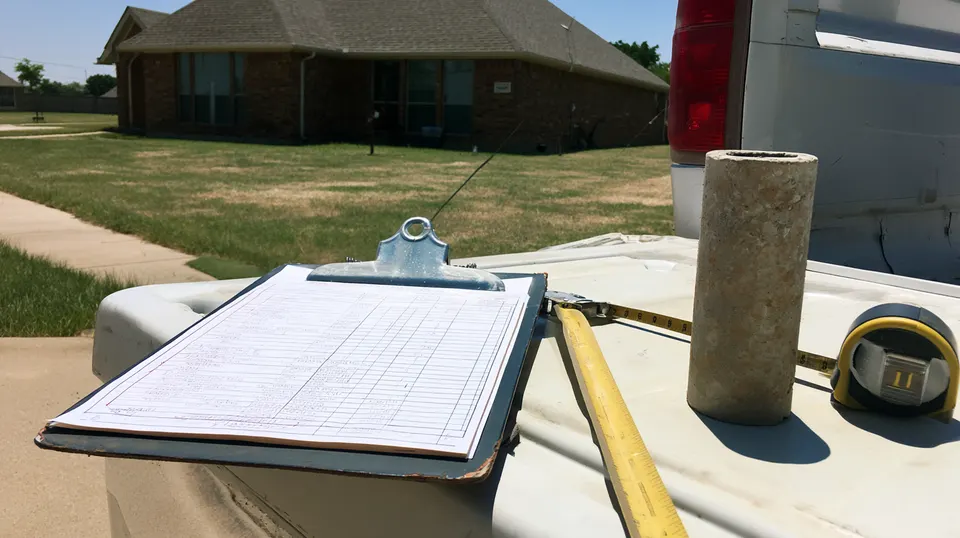
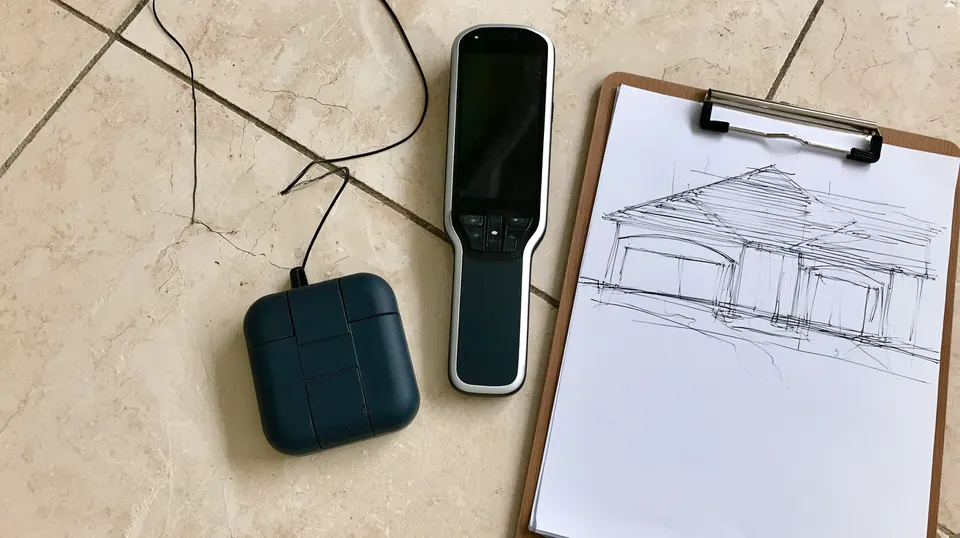
Call (972) 555-0100 to book a free inspection. A crew lead measures the floor, marks where the slab has dropped, and writes an estimate that lists every pier by location and type.
Signs you need foundation piers in McKinney
- Stair-step cracks in the brick veneer that climb several courses, wider at the top
- Doors and windows that stick on one side of the house and swing freely on the other
- A floor that slopes, or a gap under the baseboards on one wall
- Diagonal drywall cracks running from the corners of doors and windows
- A garage slab or patio that has separated from the house slab
- The frieze board or trim at the roofline pulling apart at a corner
- Cracks that keep growing across one full wet-dry cycle
Three kinds of foundation piers used in McKinney
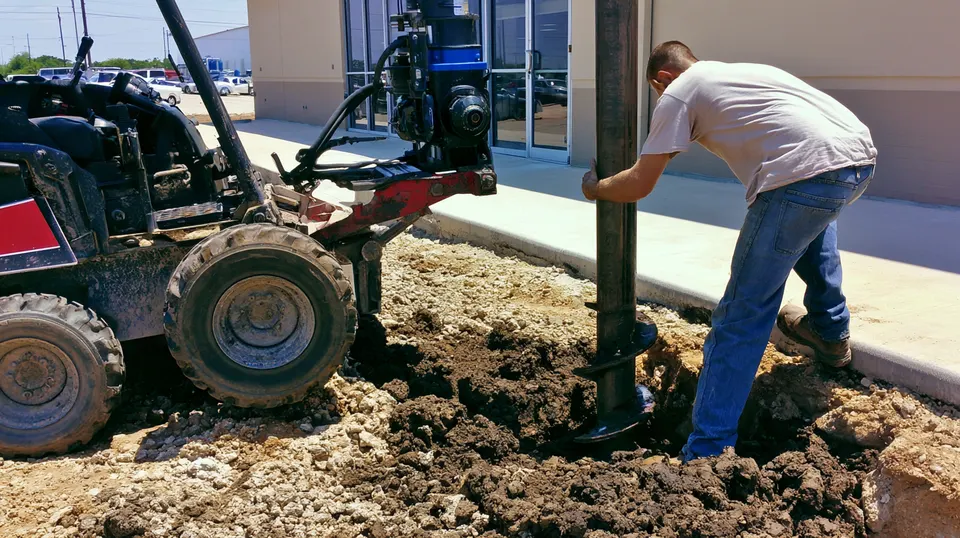
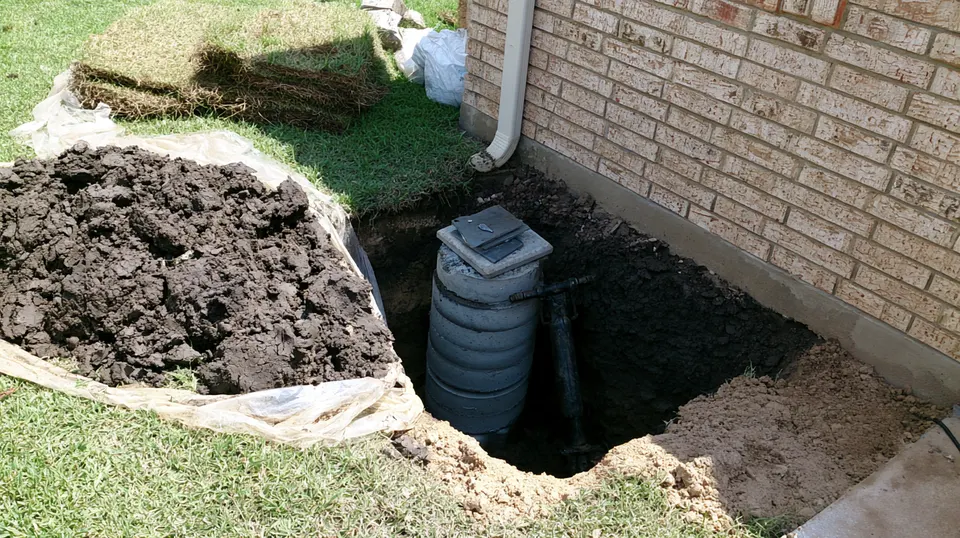
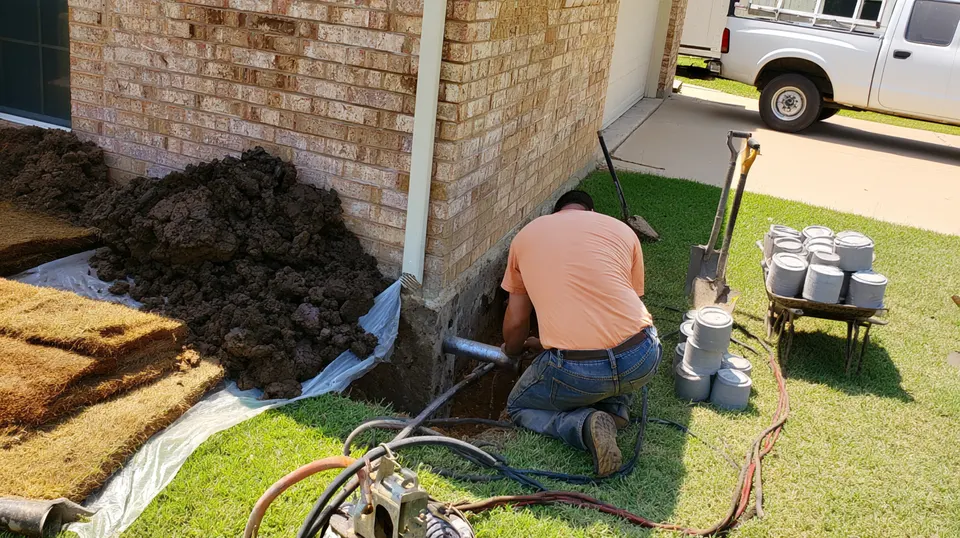
Pressed concrete piers are stacks of precast concrete cylinders pressed into the ground one on top of the next, using the weight of the house as the press, until the stack reaches refusal, which is the point where it will not go deeper. They are the most common and least expensive pier in North Texas. Steel push piers are narrower steel tubes driven the same way; they reach deeper and carry more load per pier, at a higher price. Helical piers are steel shafts with helix plates, like a large screw, turned into the ground with a hydraulic motor and measured by the torque it takes to turn them, which suits lighter structures, porches and new construction. All three are placed along the affected section of the perimeter, and the cost guides describe spacing of about 6 to 8 feet between piers.
What installing foundation piers involves in McKinney
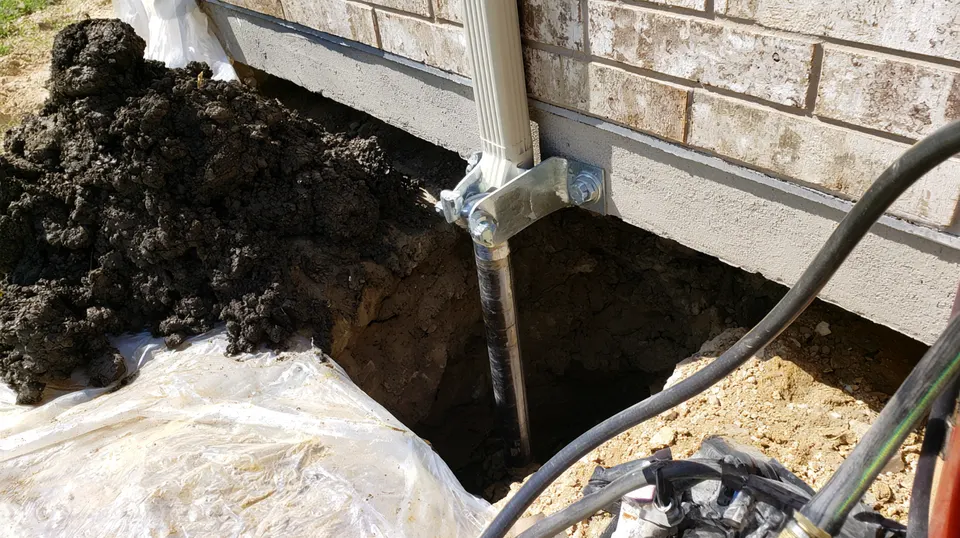
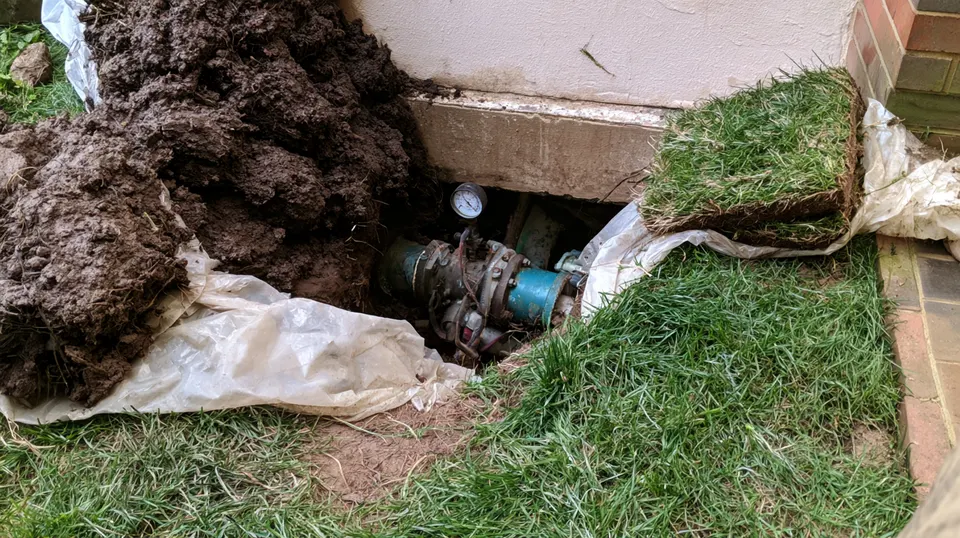
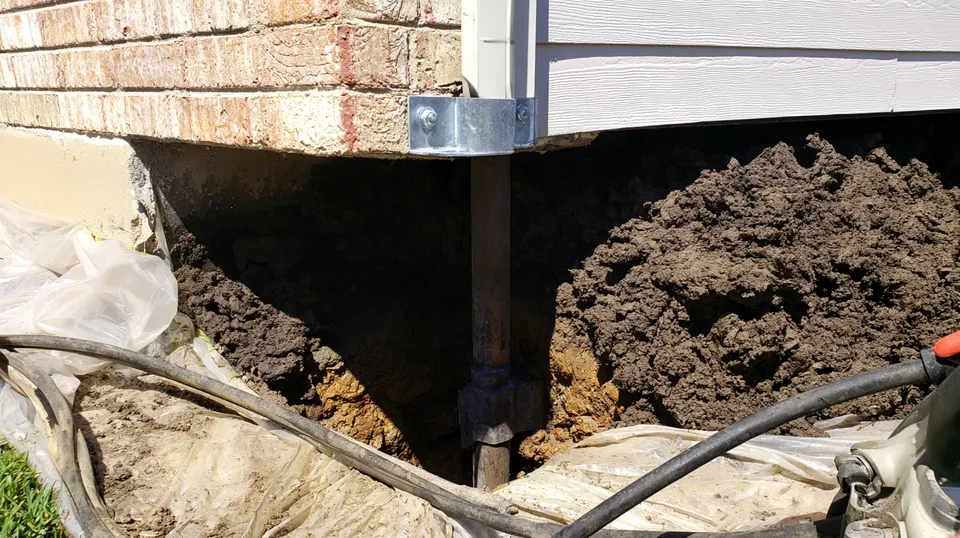
Day one starts with the elevation survey, which measures how far each part of the floor sits above or below a reference point, and the pier layout marked on the ground. The crew digs a hole at each mark beside the grade beam, the thickened concrete edge of the slab, down to the bottom of the beam. Each pier is then pressed or driven to refusal. Once every pier is set, hydraulic jacks on each one lift the slab in small steps while someone inside watches the level, so the house rises evenly and cracks close rather than open. Steel shims are set between the pier cap and the beam to hold the new height, the holes are backfilled, and the landscaping put back. Interior piers, when the middle of the slab has dropped, are reached by tunneling under the slab or by cutting through the floor, and both add cost.
The reason the soil moves is worth one sentence. The USDA NRCS says the Houston Black clay under McKinney is 40 to 60 percent clay, swells when wet, shrinks when dry, and opens cracks 1/2 to 4 inches wide at 12 inches deep in dry periods; piers work because they carry the slab below that active zone.
On permits, the City of McKinney Building Inspections guidelines require a permit for any foundation leveling or pier replacement, and the application must include an engineer’s letter and drawings showing the affected areas and whether plumbing will need testing. The engineer must be licensed and registered in Texas, and the city closes the permit only after the final engineer’s report is uploaded to its CSS portal. Engineers here work to the Texas Section of ASCE’s Guidelines for the Evaluation and Repair of Residential Foundations, Version 3, effective April 1, 2022.
Talk to a crew lead about your foundation today.
Call (972) 555-0100Foundation piers McKinney cost per pier
Four national guides agree on the per-pier number. Fixr, HomeAdvisor, This Old House and Modernize all put a foundation pier at $1,000 to $3,000 installed in their 2026 guides. Modernize is the only one that splits the range by type: pressed concrete piers near $1,000 each, steel push piers near $2,000 and helical piers near $3,000. Fixr prices a whole underpinning job at $10,000 to $40,000, which is the pier count multiplied out for a house that has settled on more than one side.
What it costs
$1,000 to $3,000
Fixr 2026 national range, per pier, steel, concrete or helical.
$1,000 to $3,000
HomeAdvisor 2026 national range, per pier, piering or underpinning.
What moves the number in McKinney: pier type (pressed or segmented concrete vs steel push vs helical), number of piers (spacing typically 6 to 8 feet along the affected perimeter), depth to load-bearing strata, interior piers requiring tunneling or slab breakouts, hydraulic lifting after installation, engineer's report and warranty.
All four guides agree on $1,000 to $3,000 per pier. Modernize is the only guide that splits by type, placing segmented or pressed concrete piers near $1,000, steel push piers near $2,000 and helical piers near $3,000. Pressed concrete piers, the most common method in North Texas, are the cheapest tier.
Estimates are free, written, and itemized. No price is quoted before someone has measured the foundation.
Your written estimate lists each pier by location and type, plus the engineer’s report and the permit as their own lines.
Related services
Piers are the usual fix for a slab foundation repair in McKinney, and the foundation repair cost page walks through the full job price with the line items. If you want the detail on each type, the pressed concrete piers, steel push piers and helical piers pages cover how each is installed and where it fits. If the house has not settled yet and the problem is a single crack, foundation crack repair may be all it needs, and a foundation inspection is how that gets decided.
Foundation piers McKinney homes need are counted, placed and priced from a floor survey, not from a guess at the curb, and the engineer’s letter the city requires is your check that the count is right. Estimates are free and written, crews are insured, and every job carries a written warranty. Call (972) 555-0100 or request a free estimate online.
Questions homeowners ask
How many piers will my house need?
It depends on how much of the perimeter has dropped. The cost guides describe piers spaced about 6 to 8 feet apart along the affected section, so a settled corner might take three or four and a full side might take eight or more. The elevation survey during the free inspection sets the count, and the engineer's letter confirms it.
Which pier type is best for McKinney clay?
All three work when installed to stable soil. Pressed concrete piers are the most common and cheapest tier in North Texas, steel push piers are narrower and driven deeper, and helical piers are screwed in and measured by torque, which suits lighter structures. The engineer's letter names the type for your house.
Do piers fix the cracks too?
Piers lift the slab, and many cracks close partly as it rises. Brick cracks are usually tuck-pointed afterward and drywall cracks patched. Cracks that stay open after the lift are sealed as a separate line item, priced by the guides at roughly $200 to $1,000.
Do I need a permit for piers in McKinney?
Yes. The City of McKinney requires a permit for any pier or footing replacement or foundation leveling, and the application must include an engineer's letter and drawings. The engineer must be licensed and registered in Texas, and the city closes the permit only after the final engineer's report is uploaded.
Can piers go under the middle of the house?
Yes, but it costs more. Interior piers are reached either by tunneling under the slab from the outside or by breaking through the floor inside, and the cost guides list both as drivers that raise the price. The estimate says which approach the crew would use and why.
Sources for local facts on this page
- USDA NRCS Official Series Description, Houston Black series, 2026
- USDA NRCS, Houston Black Texas State Soil fact sheet, 2026
- Texas Section ASCE, Recommended Practice for the Design of Residential Foundations, Version 2, adopted Oct 4, 2007
- City of McKinney Building Inspections, General Guidelines for Foundation Repair, accessed Sep 2026
- ASCE Texas Section, Texas Residential Foundations Guidelines page, texasce.org, 2022
- US Census Bureau ACS 2024 1-year, table B25035, via Census Reporter, 2024
Free estimate
Get a free written estimate for foundation piers
A crew lead measures the foundation, explains what is moving and why, and hands you an itemized estimate you keep.
Call (972) 555-0100Mon to Sat 7am to 7pm