McKinney TX Foundation Repair
Concrete Leveling in McKinney, TX
Polyurethane foam and mudjacking that raise sunken driveways, patios, walks and garage floors in McKinney, with a free written estimate and same-week scheduling.
Free estimate
Request a free estimate for concrete leveling
Tell us what you are seeing and a crew lead will call to set a same-week inspection in McKinney. No price is quoted until the foundation has been measured.
Prefer the phone?
Call (972) 555-0100Mon to Sat 7am to 7pm
Concrete leveling McKinney homeowners ask about is usually for a driveway, patio, sidewalk, pool deck or garage floor that has sunk on one side, not for the house foundation itself. Concrete leveling raises a slab that has dropped by pumping material through small holes into the void underneath it. Two materials do the job: a sand and cement slurry (mudjacking, sometimes called slab jacking) and expanding polyurethane foam. Both lift the slab back to grade in a single visit without tearing it out and pouring new concrete, which is what makes leveling worth a look before replacement.
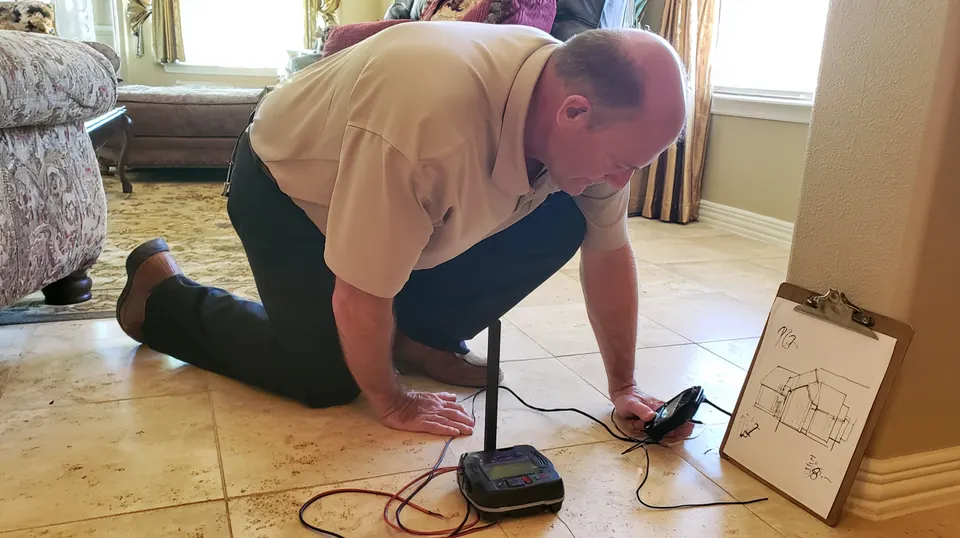
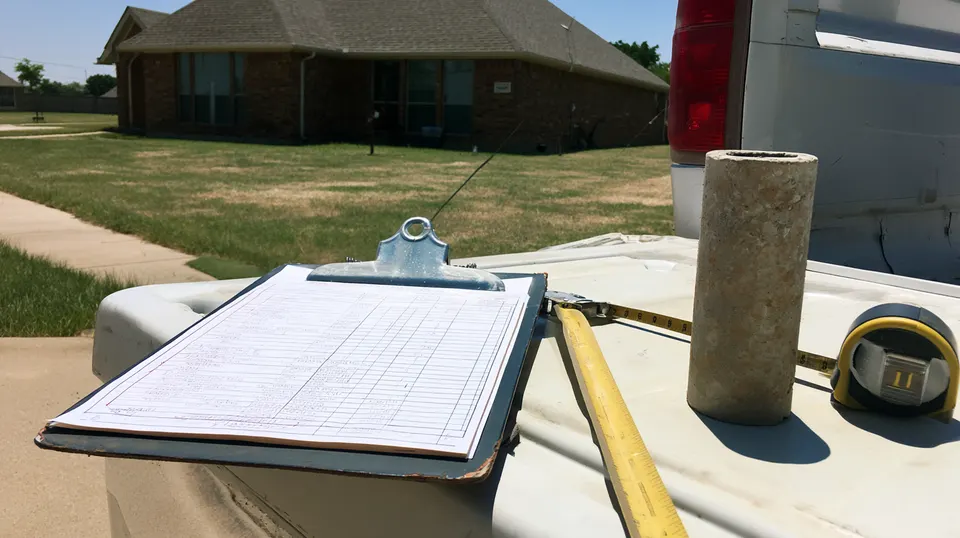
The free inspection measures how far the slab has dropped, finds the void with a few test probes, and looks for the reason the soil left. You get a written estimate before the visit ends. Call (972) 555-0100 for same-week scheduling. Requests are routed to an insured local contractor working across Collin County, and calls may be recorded for quality.
Signs you need concrete leveling in McKinney
Sunken concrete is easy to spot once you know where to look. These are the usual signs:
- A lip at the joint between the driveway and the garage floor, or between two driveway sections, that catches a toe or a tire.
- A patio or walkway that now slopes toward the house, sending rainwater against the slab edge instead of away from it.
- Water pooling on a driveway or patio after rain in a spot that used to drain.
- A hollow sound when you tap the slab with a broom handle, which means the soil under it has washed out or shrunk away.
- A visible gap under the edge of a slab, or a step that has pulled away from the porch it once met.
- Sidewalk panels that have tilted, leaving a trip edge along a path to the front door.
- An interior floor, often in a garage or a slab addition, that has dropped between the house piers and left a gap under the baseboard.
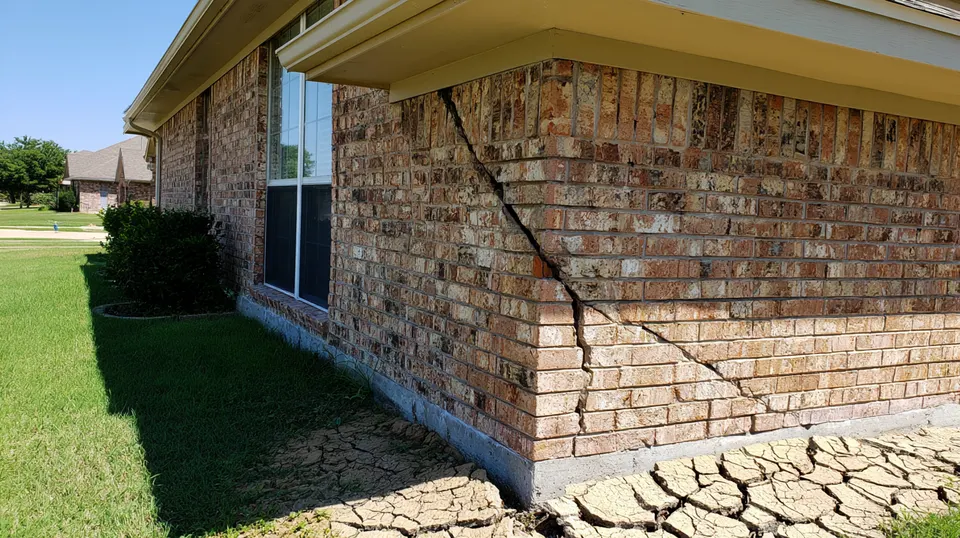
A slab that has dropped less than an inch and stopped is a leveling job. A slab that keeps dropping, or a house perimeter that is settling into the clay, needs the pier work described on the slab foundation repair page, and the inspection will say which you have.
What concrete leveling involves in McKinney
The soil is why so many McKinney slabs sink. The USDA NRCS fact sheet for the Houston Black series, the Texas state soil that covers the Blackland Prairie from north of Dallas to San Antonio, calls it the classic Vertisol that shrinks and swells markedly with changes in moisture, and notes that its very high shrink-swell potential is a common limitation for building sites in metropolitan areas. The NRCS Official Series Description puts its clay content at 40 to 60 percent and describes cracks 1/2 to 4 inches wide opening at 12 inches deep during dry periods. National Weather Service Fort Worth normals put DFW’s wettest month, May, at 4.78 inches of rain and its driest, July, at 2.08 inches, and the same office recorded just 1.25 inches for the whole summer of 2023. A patio slab poured on that clay loses its support every dry summer and gets it back, unevenly, every wet spring.
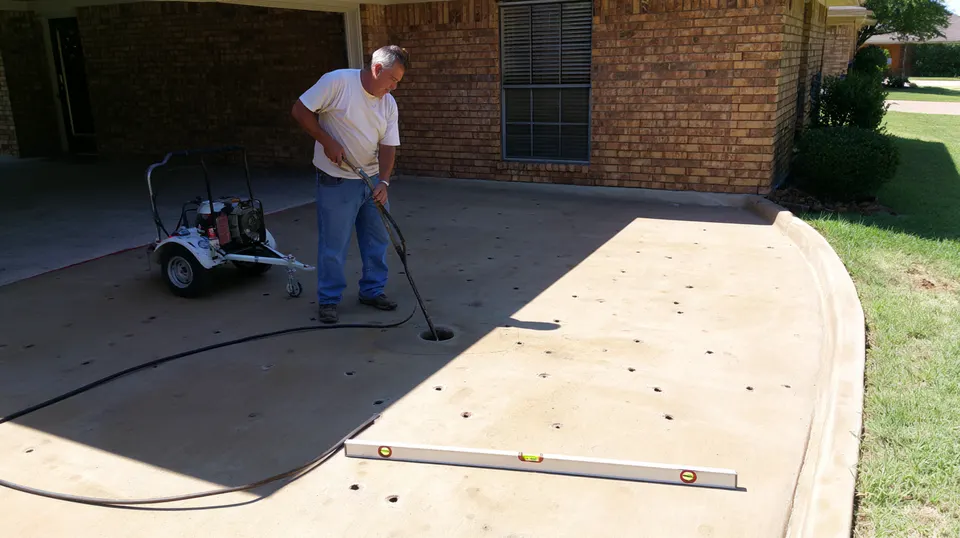
Day one is the whole job on most leveling work. The crew starts by marking the low points with a level and a string line, then drills a pattern of holes through the slab. For foam, the holes are about five eighths of an inch across, spaced a few feet apart. For mudjacking, the holes are closer to an inch and a half or two inches. A port is set in each hole and the material is pumped in.
- Mudjacking slurry is a mix of sand, cement and water pumped under pressure. It fills the void from the far side toward the port and lifts the slab as it packs in. It is heavy, so it is used on thick slabs and where the added weight will not matter.
- Polyurethane foam is a two-part liquid that expands to many times its volume within seconds of mixing. It reaches into small voids, weighs a fraction of slurry, and takes load within about an hour. It is the usual choice for driveways, pool decks and any slab where the soil below is already soft.
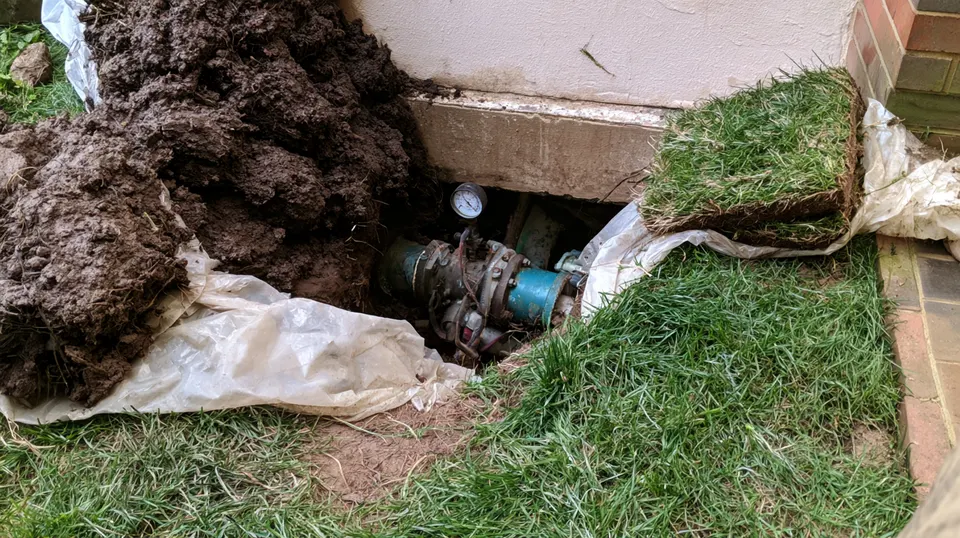
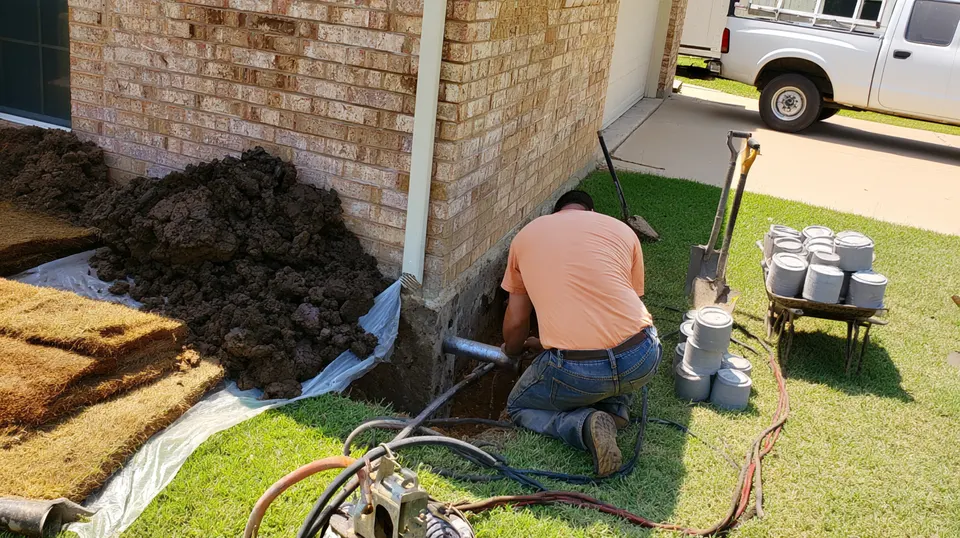
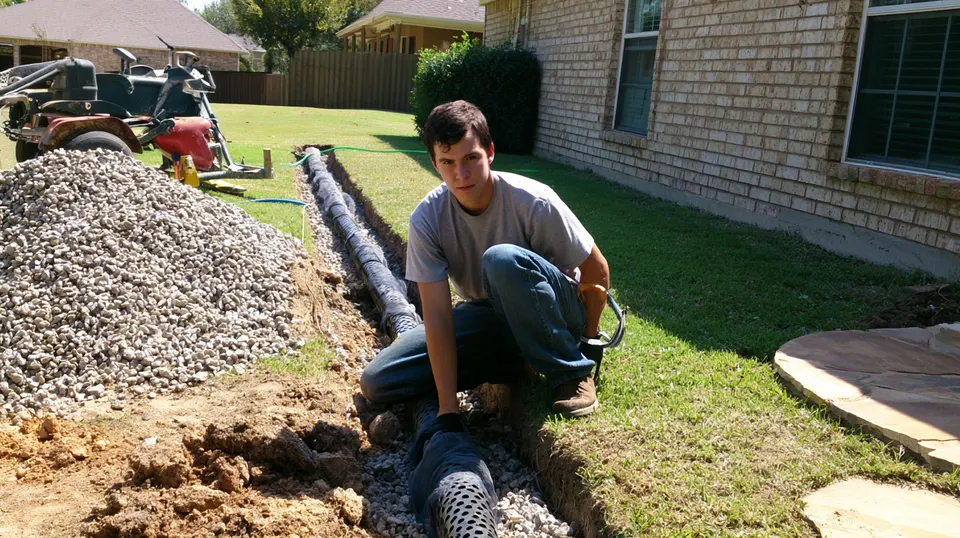
The crew watches the slab rise with a level and stops the moment it meets the neighboring section. Holes are patched with a grout matched to the concrete, and the joints are caulked so water stops getting under the edge. Where a downspout or a yard slope caused the washout, the estimate will say so, and foundation drainage fixes the cause so the slab stays put.
On permits, the City of McKinney Building Inspections General Guidelines for Foundation Repair require a permit for any foundation leveling, pier or footing replacement, shimming or floor system replacement. A detached driveway, walk or patio is not the house foundation, but an interior floor is, so lifting a floor inside the house falls under the city’s permit and engineer’s letter requirement. The contractor confirms with Building Inspections before the work is scheduled and pulls the permit where one is required.
- 1
Call or send a request
Call (972) 555-0100 or use the form. Tell us what you are seeing: cracks, sticking doors, sloping floors, or water where it should not be.
- 2
On-site inspection and written estimate
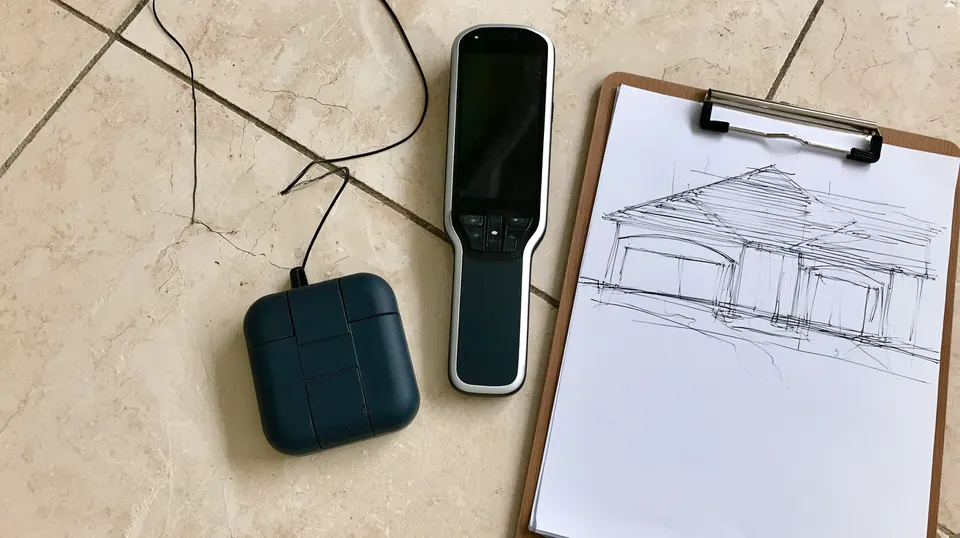
A crew lead measures the foundation with a level survey, checks the drainage, and writes an itemized estimate you keep. The estimate is free.
- 3
Scheduled work
You get a start date. Most residential pier jobs take one to three days. Landscaping is moved and put back.
- 4
Walkthrough and warranty paperwork
You walk the job with the crew lead, see the post-lift readings, and receive the written warranty and the engineer paperwork if your city required it.
Talk to a crew lead about your foundation today.
Call (972) 555-0100What concrete leveling costs in McKinney
Fixr’s 2025 concrete leveling guide puts the typical job at $500 to $1,700 with a national average of $1,500, and gives a per square foot range of $1.80 to $25 depending on material. HomeAdvisor’s 2026 guide lists mudjacking at $500 to $1,300, This Old House’s 2026 guide puts it at $550 to $1,300, and Modernize’s 2026 guide lists foam injection separately at $900 to $2,500 per job. Foam costs more per square foot, at $20 to $25 in Fixr’s 2025 guide, but it is lighter and cures faster, so the material choice is the main thing that moves the number.
What it costs
$500 to $1,700
Fixr 2025 national range, national average and typical range; low $180, high $2,500; $1.80 to $25 per square foot, typical $1,500.
$550 to $1,450
Modernize 2026 national range, mudjacking or slabjacking; polyurethane foam injection $900 to $2,500.
What moves the number in McKinney: material (mudjacking slurry vs polyurethane foam), square footage and how far the slab has dropped, number of injection holes, slab location (driveway, patio, garage, interior floor), void size under the slab.
Job totals for mudjacking agree closely ($500 to $1,900). Polyurethane foam runs higher per job ($900 to $2,500 per Modernize) and much higher per square foot ($20 to $25 per Fixr), but is lighter and cures faster. Fixr's dedicated concrete leveling page is dated 2025.
Estimates are free, written, and itemized. No price is quoted before someone has measured the foundation.
Those are national ranges from named guides, not quotes, and the square footage and drop on your free written estimate are what set the real figure.
Concrete leveling McKinney driveways, patios and garage floors need
Each surface has its own habits, and the estimate is written around them.
Driveways sink most often at the garage joint and at the street apron, where tires load the same spot every day and a downspout or a sprinkler head keeps the edge wet. Fixr’s 2025 guide prices leveling a 600 square foot driveway at $3,000 to $15,000, a wide range because a single dropped section and a whole driveway are very different jobs. Foam is the usual choice because it takes traffic within the hour.
Patios and pool decks tilt toward the house when the backfill against the slab was never compacted. The tell is water pooling at the door or running under the threshold. Fixr’s 2025 guide puts a 200 square foot patio at $360 to $5,000. Leveling pairs with recaulking the joint against the house, because a sealed joint is what keeps the void from coming back.
Garage floors and interior slabs are the case where leveling and foundation work meet. A garage floor is often poured separately from the house slab and can drop on its own, which is a straightforward foam job. A living-area floor that has dropped between the house piers can also be lifted with foam, but that is foundation leveling in the city’s terms, so the permit and engineer’s letter apply. When the drop is part of a perimeter that is still moving, the fix is piers, and the sinking foundation page explains how crews tell the difference.
Sidewalks and steps are small jobs where the point is a safe trip edge, and they are usually added to a driveway or patio visit.
Related services
When the sunken concrete is the house itself rather than a flatwork slab, slab foundation repair with piers is the right page, and house leveling covers bringing a whole pier and beam or slab house back to an even floor. Because water is the reason most of these slabs dropped, foundation drainage is the most common companion job. If the perimeter is dropping too, start with the sinking foundation page, and use the foundation repair cost page to see how leveling line items compare with pier work. Crews also cover Allen and Princeton.
The concrete leveling McKinney homeowners get the most from is the kind that fixes the void and the water that made it. Have the slab measured, get the material and the square footage in writing, and ask what will keep it from dropping again. Call (972) 555-0100 or send the free estimate form, and a crew lead will be out the same week with a free, written estimate.
Questions homeowners ask
What is the difference between mudjacking and foam leveling?
Mudjacking pumps a slurry of sand, cement and water under the slab through holes about the size of a coffee cup. Foam leveling pumps a two-part polyurethane through holes the size of a dime, and the foam expands to lift the slab. Foam is lighter and cures faster; mudjacking usually costs less per job.
How long before I can drive on a leveled driveway?
Polyurethane foam typically takes load within an hour or so of injection. Mudjacking slurry needs longer to cure, usually a day. The estimate states the cure time for the material planned for your slab.
Can concrete leveling fix my house foundation?
Sometimes, for an interior floor that has dropped between piers. It is not the fix for a perimeter that keeps settling into the clay, because it fills the void without reaching stable soil. That job needs piers, and the inspection will tell you which situation you have.
Will the holes show afterward?
Foam ports are about five eighths of an inch across and are patched with a color-matched grout, so they fade into the surface. Mudjacking holes are larger and more visible. Either way the crew patches every hole before leaving.
Why did my slab sink in the first place?
Usually one of three things: the fill under it was never compacted, water washed soil out from under an edge, or the Blackland Prairie clay shrank during a dry summer and left a void. Fixing the drainage that caused it keeps the leveled slab from dropping again.
Sources for local facts on this page
- USDA NRCS, Houston Black Texas State Soil fact sheet (hosted by Texas Water Development Board), 2026
- USDA NRCS Official Series Description, Houston Black series, 2026
- National Weather Service Fort Worth, DFW Annual Normals, Means and Extremes, 2021
- National Weather Service Fort Worth, DFW Monthly and Annual Precipitation, 2026
- City of McKinney Building Inspections, General Guidelines for Foundation Repair, accessed Sep 2026
Free estimate
Get a free written estimate for concrete leveling
A crew lead measures the foundation, explains what is moving and why, and hands you an itemized estimate you keep.
Call (972) 555-0100Mon to Sat 7am to 7pm