McKinney TX Foundation Repair
Pressed Concrete Piers in McKinney, TX
The most common and lowest-cost pier used under settled McKinney slabs, built from precast concrete cylinders pressed into the clay one at a time until they refuse to go deeper.
Free estimate
Request a free estimate for pressed concrete piers
Tell us what you are seeing and a crew lead will call to set a same-week inspection in McKinney. No price is quoted until the foundation has been measured.
Prefer the phone?
Call (972) 555-0100Mon to Sat 7am to 7pm
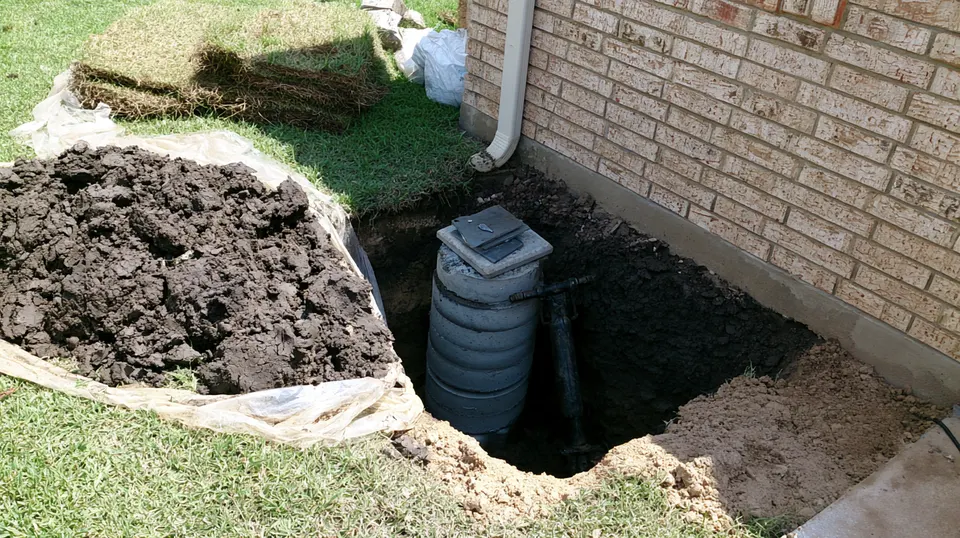
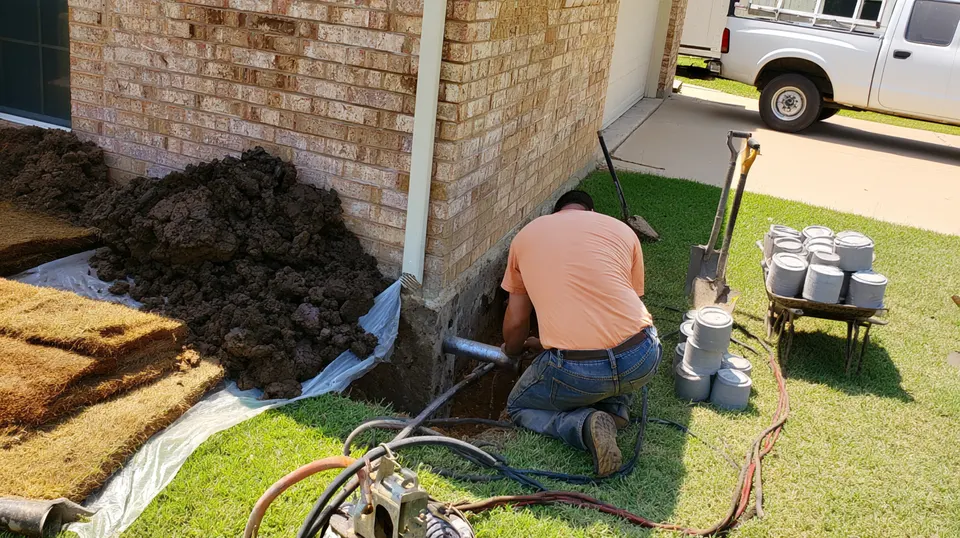
Pressed concrete piers McKinney crews install more than any other pier type are stacks of precast concrete cylinders pressed into the ground one on top of another, using the weight of the house itself as the press. Each cylinder is a short, solid concrete section. The crew digs beside the edge of the slab, sets the first cylinder, pushes it down with a hydraulic ram braced against the foundation, sets the next one on top, and repeats until the stack reaches refusal, the depth where it will not go any further. The slab is then jacked up on the finished pier and held there with shims. They are the standard fix for a settled slab in McKinney because they are quick to install, need no heavy equipment in the yard, and are the least expensive pier type in the national cost guides.
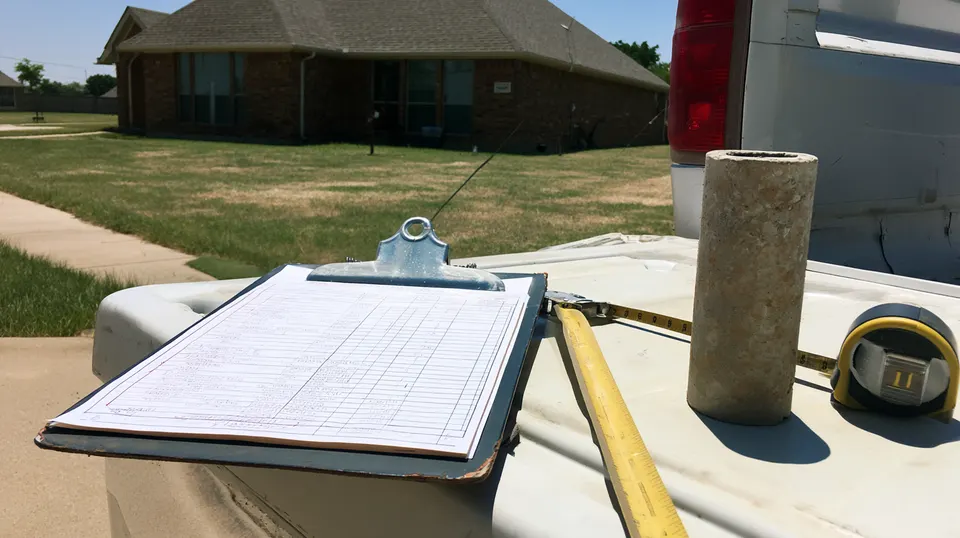
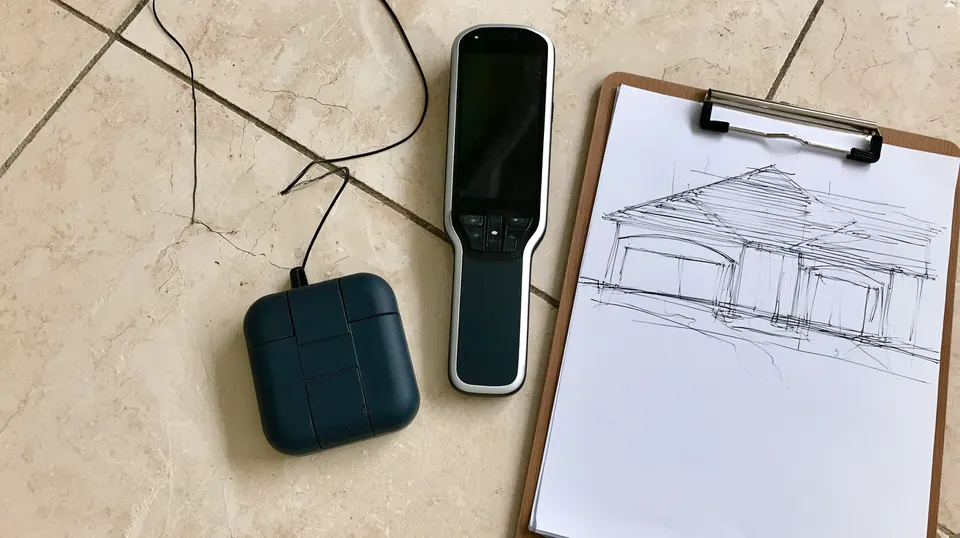
Call (972) 555-0100 to schedule a free inspection. A crew lead takes floor elevations, marks where the slab has dropped, and writes an itemized estimate with each pier by location.
When to call about pressed concrete piers in McKinney
- The brick veneer shows stair-step cracks along one side or at one corner of the house
- Doors on that side stick or no longer latch, while doors elsewhere work fine
- The floor slopes toward the settled corner, or a marble rolls the same direction every time
- A gap has opened between the slab edge and the soil, or between the brick and the frieze board
- Drywall cracks run diagonally from the corners of doors and windows
- The house sat through a drought summer, such as 2023 when the National Weather Service recorded just 1.25 inches at DFW from June through August, and the cracks appeared afterward
How pressed concrete piers compare with steel push piers
Both are pressed to refusal using the house as the reaction weight, so the installation looks similar from the yard. The differences are diameter, depth and price. A concrete pier is wider, so it spreads its load over more soil and refuses sooner; a steel push pier is a narrow tube that pushes through the clay to greater depth before it refuses, which is why an engineer may specify steel under a heavy two-story section or where the stable soil is deep. A helical pier is different again, a shaft with screw plates turned into the ground and measured by torque rather than pressed. In the 2026 Modernize guide, the only one that prices by type, pressed concrete piers come in near $1,000 each, steel push piers near $2,000 and helical piers near $3,000. The foundation piers page covers all three side by side.
What installing pressed concrete piers involves in McKinney
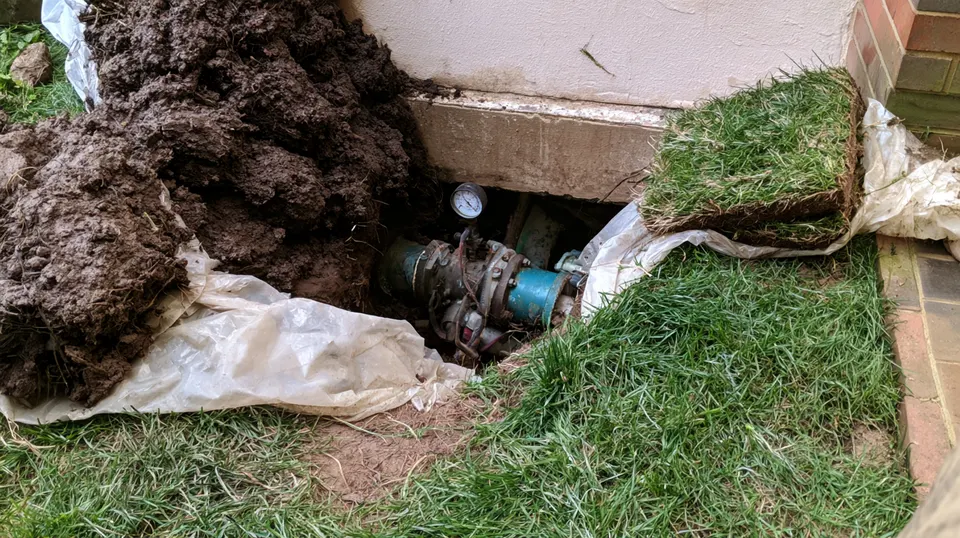
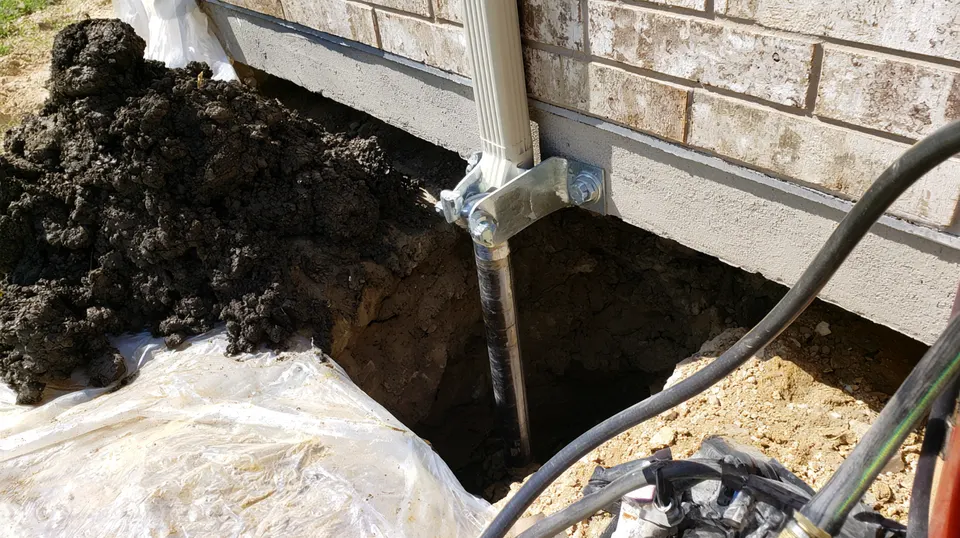
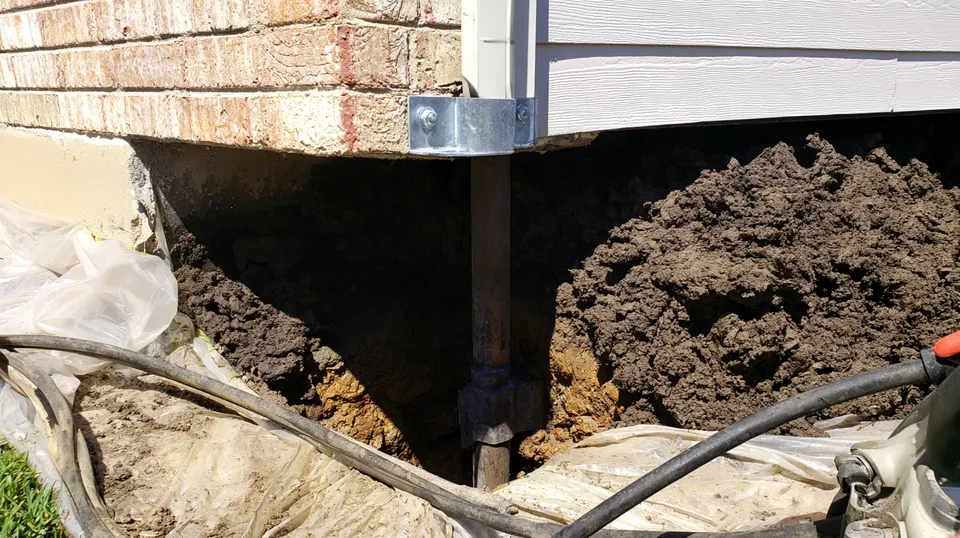
Day one starts with the elevation survey, which measures how far each point on the floor sits above or below a reference, and the pier layout marked on the ground. The cost guides describe spacing of about 6 to 8 feet along the affected section of the perimeter. At each mark the crew digs a hole beside the grade beam, the thickened concrete edge of the slab, down to its underside. The hydraulic ram is braced against the beam and the first cylinder is pressed, then the next, with the crew logging the pressure until the stack refuses. A pier cap goes on top. When every pier is set, jacks on each cap lift the slab a little at a time while someone inside watches the level and the cracks, so the house comes up evenly. Steel shims lock in the new height, the holes are backfilled, and the beds and sod are put back. Interior piers, for a slab that has dropped in the middle, are reached by tunneling under the slab from outside or by cutting through the floor inside.
The soil is the reason any of this is needed. The USDA NRCS says the Houston Black clay under McKinney is 40 to 60 percent clay with very high shrink-swell potential, opening cracks 1/2 to 4 inches wide at 12 inches deep in dry periods, and the Texas Comptroller notes that 2022 was the worst drought in the state after 2011. A pier carries the slab below that shrinking layer to soil that does not change with the weather.
On permits, the City of McKinney Building Inspections guidelines require a permit for any foundation leveling or pier replacement on slab and pier and beam homes, and the application must include an engineer’s letter and drawings of the affected areas. The engineer must be licensed and registered in Texas, and the city closes the permit only after the final engineer’s report is uploaded to its CSS portal.
Talk to a crew lead about your foundation today.
Call (972) 555-0100Pressed concrete piers McKinney cost per pier
Fixr, HomeAdvisor, This Old House and Modernize all put a foundation pier at $1,000 to $3,000 installed in their 2026 guides, and Modernize places pressed or segmented concrete piers at the bottom of that band, near $1,000 each. Fixr prices a full underpinning job at $10,000 to $40,000, which is what a whole-perimeter pier count adds up to. The count is what moves your number, and the count comes from the floor survey, not from the size of the house.
What it costs
$1,000 to $3,000
Fixr 2026 national range, per pier, steel, concrete or helical.
$1,000 to $3,000
HomeAdvisor 2026 national range, per pier, piering or underpinning.
What moves the number in McKinney: pier type (pressed or segmented concrete vs steel push vs helical), number of piers (spacing typically 6 to 8 feet along the affected perimeter), depth to load-bearing strata, interior piers requiring tunneling or slab breakouts, hydraulic lifting after installation, engineer's report and warranty.
All four guides agree on $1,000 to $3,000 per pier. Modernize is the only guide that splits by type, placing segmented or pressed concrete piers near $1,000, steel push piers near $2,000 and helical piers near $3,000. Pressed concrete piers, the most common method in North Texas, are the cheapest tier.
Estimates are free, written, and itemized. No price is quoted before someone has measured the foundation.
Your written estimate lists each pier by location, the engineer’s report and the permit as separate lines.
Related services
Pressed concrete piers are the usual method behind a slab foundation repair in McKinney, and the foundation repair cost page shows how the per-pier price becomes a whole-job figure. For the other pier types, read steel push piers and the overview on foundation piers. If the slab is dropping and you are not sure why, the sinking foundation page explains the pattern, and a foundation inspection is where the pier count is set.
Pressed concrete piers McKinney slabs get lifted on are a proven, plainly priced repair when they are pressed to true refusal and counted from a floor survey, and the engineer’s letter the city requires is your check on both. Estimates are free and written, crews are insured, and every job carries a written warranty. Call (972) 555-0100 or request a free estimate online.
Questions homeowners ask
What does refusal mean?
Refusal is the point where the pier will not press any deeper under the weight of the house. The crew pushes each concrete cylinder down with a hydraulic ram braced against the slab, adds the next one, and repeats until the stack stops moving. That depth is recorded for every pier and goes in the engineer's report.
Are pressed concrete piers as good as steel piers?
For most settled slabs on Collin County clay, yes, and they cost less. Modernize's 2026 guide puts pressed concrete piers near $1,000 each against $2,000 for steel push piers. Steel reaches deeper and carries more load per pier, so an engineer may specify it for a heavy two-story section or where refusal comes too shallow.
How long does the job take?
A typical perimeter job of eight to twelve piers is usually dug, pressed and lifted in a few days, with the landscaping put back at the end. Interior piers that need tunneling add time. Your written estimate gives a schedule for your pier count.
Does the city require a permit for pressed concrete piers?
Yes. The City of McKinney requires a permit for any pier or footing replacement or foundation leveling, with an engineer's letter and drawings in the application. The engineer must be licensed and registered in Texas. The permit is closed after the final engineer's report is uploaded to the city's portal.
Will the house be lifted back to perfectly level?
The goal is to close cracks and free doors without causing new damage, which usually means lifting most of the way rather than all of the way. A slab that has been down for a long time can crack if forced fully back. The crew and the engineer agree the target before the lift.
Sources for local facts on this page
- USDA NRCS Official Series Description, Houston Black series, 2026
- USDA NRCS, Houston Black Texas State Soil fact sheet, 2026
- Texas Section ASCE, Recommended Practice for the Design of Residential Foundations, Version 2, adopted Oct 4, 2007
- City of McKinney Building Inspections, General Guidelines for Foundation Repair, accessed Sep 2026
- Texas Comptroller of Public Accounts, Fiscal Notes, Drought in Texas, December 2022
- National Weather Service Fort Worth, DFW Monthly and Annual Precipitation, 2026
Free estimate
Get a free written estimate for pressed concrete piers
A crew lead measures the foundation, explains what is moving and why, and hands you an itemized estimate you keep.
Call (972) 555-0100Mon to Sat 7am to 7pm