McKinney TX Foundation Repair
Helical Piers in McKinney, TX
Helical piers screw into firm soil under McKinney additions, porches and pier and beam homes where a push pier has nothing to push against.
Free estimate
Request a free estimate for helical piers
Tell us what you are seeing and a crew lead will call to set a same-week inspection in McKinney. No price is quoted until the foundation has been measured.
Prefer the phone?
Call (972) 555-0100Mon to Sat 7am to 7pm
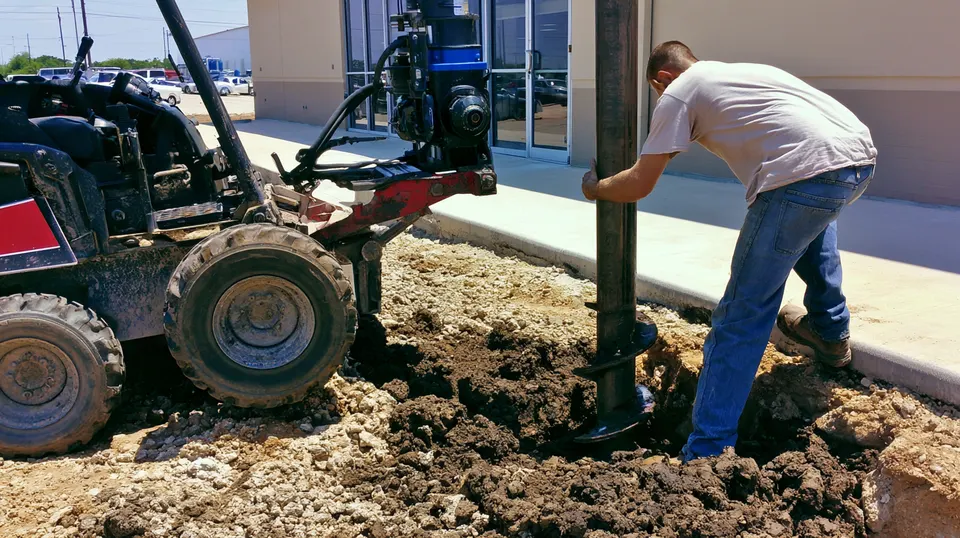
Helical piers McKinney crews install are steel shafts with one or more screw-shaped plates welded near the tip, turned into the ground by a hydraulic motor until the soil resists hard enough to carry a set load. A pier is any post placed under a foundation to carry its weight down to stable ground. Push piers and pressed concrete piers rely on the weight of the house to drive them. A helical pier does not, which is why it is the pier for light structures, additions, porches, pier and beam houses, retaining walls and new construction where there is nothing yet to push against.
If your McKinney addition has dropped away from the main house, your porch slab tilts, or the posts under a pier and beam home keep sinking, a helical pier is likely on the estimate. Call (972) 555-0100 for a free on-site inspection and a written estimate. Crews are insured and every job carries a written warranty.
Signs you need helical piers in McKinney
- A one-story addition, sunroom or garage that has settled away from the main house, leaving a crack where the two slabs meet.
- A porch, stoop or patio slab that tilts, with a gap opening at the house wall.
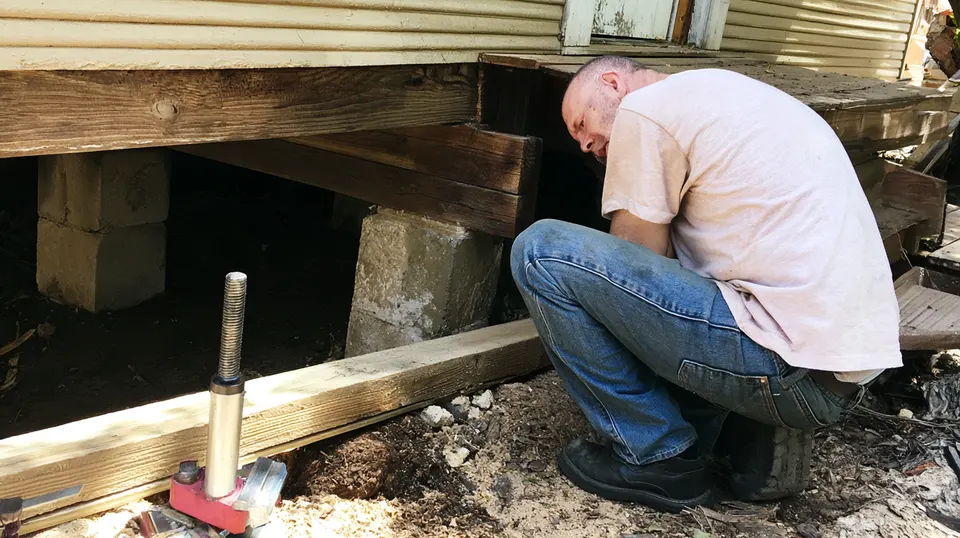
- Posts under a pier and beam house that keep sinking into soft or wet crawl space soil, so the floor sags again after shimming.
- Soft or filled soil that a pressed concrete pier would keep sinking through without ever refusing.
- A planned room addition, deck or new build on a lot with known clay movement, where piers go in before the concrete is poured.
- A retaining wall or stem wall that leans, which calls for a helical tieback, an anchor turned in sideways to hold the wall.
- A tight side yard or interior spot where only a small drive head will fit.
What helical piers involve in McKinney
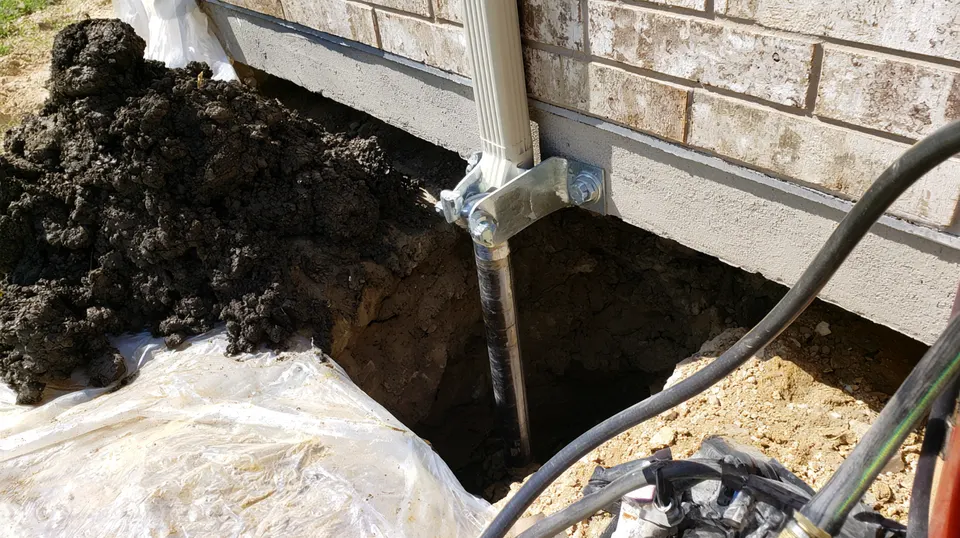
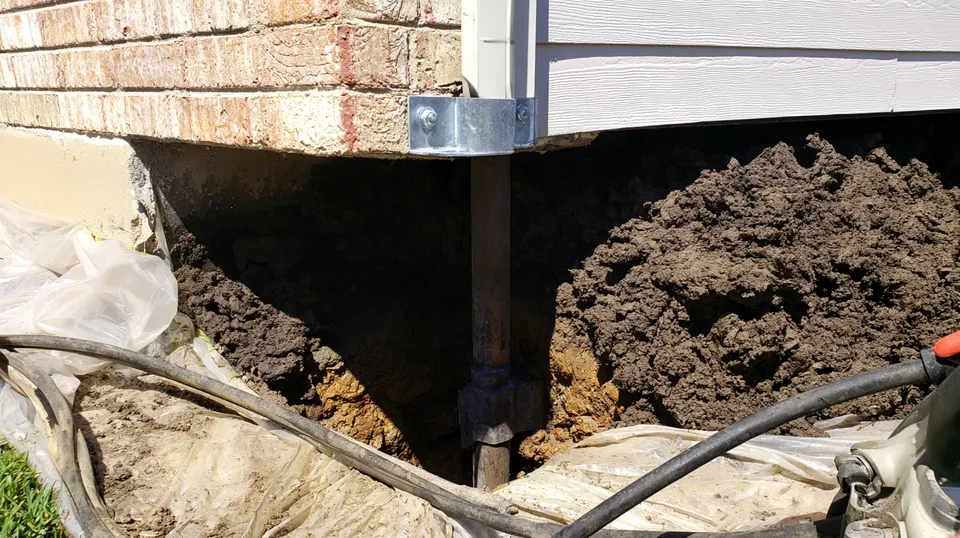
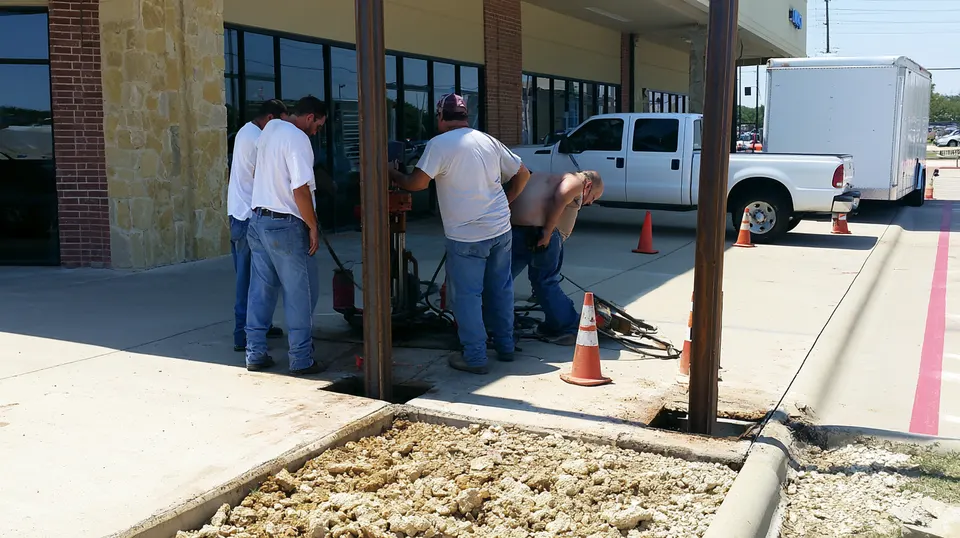
The crew starts by exposing the footing at each pier location, spaced six to eight feet apart along the settled edge. A drive head on a skid steer or a hand-held torque motor turns the lead section into the ground. Extensions are bolted on and turning continues. The important number is torque, the twisting force it takes to turn the pier. Torque rises as the plates bite into denser soil, and the relationship between torque and holding strength is well established, so the installer reads the pier’s capacity off the gauge in real time and logs it. When the target torque is reached, the pier is at depth.
A bracket is then fitted to the footing and locked to the pier head. If the structure needs lifting, jacks on the brackets raise it a little at a time while someone checks doors and cracks inside. The holes are backfilled and the site is put back.
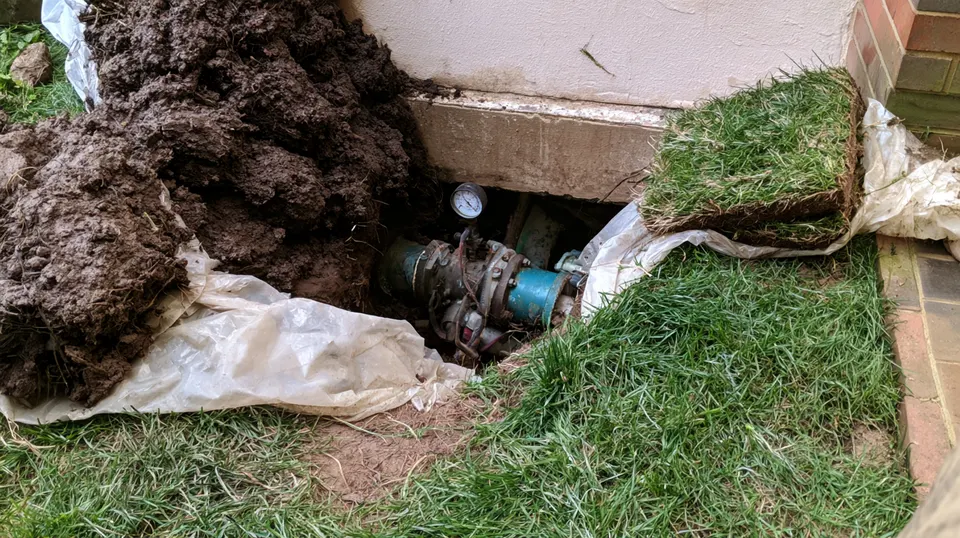
Helical piers make less mess than push piers or pressed piers because nothing is hammered or pushed against the house, which matters for a light addition that could crack under that load. They also go in fast, with no waiting for concrete to cure. Under pier and beam homes, they are set beneath the beams or under new concrete pads in the crawl space.
The City of McKinney requires a permit for any foundation leveling, pier or footing replacement or shimming, on slab-on-grade and pier and beam houses alike, according to its Building Inspections guidelines for foundation repair. The application must include an engineer’s letter and drawings, the work must be engineered by a licensed professional registered in Texas, and the permit closes only after the final engineer’s report is uploaded. New piers under an addition follow the same path.
Talk to a crew lead about your foundation today.
Call (972) 555-0100Helical piers McKinney: when a screw pile beats a push pier
The USDA Natural Resources Conservation Service describes the Houston Black clay under much of the Blackland Prairie as 40 to 60 percent clay with very high shrink-swell potential, and notes that water enters it rapidly when it is dry and cracked and very slowly when it is moist. That wet-dry cycle moves everything sitting on it. A push pier uses the house as a reaction weight, and a heavy two-story home supplies plenty. A one-story addition, a porch, or a pier and beam house near McKinney’s historic downtown square, where Dustin Pitts Realty says homes date to the late 1800s and early 1900s, often does not. Push against a light structure and the structure lifts before the pier ever reaches firm soil. A helical pier gets its holding strength from torque, not from the house, so it works on a lightly loaded footing and it works before the slab exists. That is also why engineers specify them for commercial foundation repair where a slab edge or a loading dock needs support without disturbing the building.
What helical piers cost in McKinney
Fixr, HomeAdvisor, This Old House and Modernize all put a foundation pier at $1,000 to $3,000 each in their 2026 guides. Modernize splits that by type and puts a helical pier at about $3,000, the top of the range, against about $2,000 for a steel push pier and about $1,000 for a pressed concrete pier. For tiebacks, the sideways anchors that hold a leaning wall, Fixr’s 2026 guide gives $5,000 to $15,000 per job and Modernize gives $6,000 to $12,000.
What it costs
$1,000 to $3,000
Fixr 2026 national range, per pier, steel, concrete or helical.
$1,000 to $3,000
HomeAdvisor 2026 national range, per pier, piering or underpinning.
What moves the number in McKinney: pier type (pressed or segmented concrete vs steel push vs helical), number of piers (spacing typically 6 to 8 feet along the affected perimeter), depth to load-bearing strata, interior piers requiring tunneling or slab breakouts, hydraulic lifting after installation, engineer's report and warranty.
All four guides agree on $1,000 to $3,000 per pier. Modernize is the only guide that splits by type, placing segmented or pressed concrete piers near $1,000, steel push piers near $2,000 and helical piers near $3,000. Pressed concrete piers, the most common method in North Texas, are the cheapest tier.
Estimates are free, written, and itemized. No price is quoted before someone has measured the foundation.
Those are national figures, not a quote; the free on-site estimate is written and itemized by pier.
Related services
The foundation piers page compares helical, steel push and pressed concrete piers in one place. When a heavy slab has settled, steel push piers usually cost less per pier and reach a similar depth. Helical piers under a wood-framed house are part of pier and beam foundation repair, where they replace posts that sank into a wet crawl space. Larger slabs, retaining walls and tiebacks fall under commercial foundation repair. If you are not sure which pier you need, start with a foundation inspection.
The right pier depends on what it has to hold and what it has to hold it in. For helical piers McKinney additions, porches and pier and beam homes need, call (972) 555-0100. The inspection is free, the estimate is written, and same-week scheduling is available.
Questions homeowners ask
What is the difference between helical piers and push piers?
A helical pier is screwed into the ground with a motor and gets its holding strength from the torque it takes to turn it. A push pier is pushed down using the weight of the house. Helical piers fit light structures and new construction, and push piers fit heavy settled slabs.
Can helical piers be used under a pier and beam house?
Yes. They are set under the beams or under new concrete pads in the crawl space to replace wood or concrete posts that sank into wet soil. Because they do not need a heavy structure to push against, they work well under a wood-framed house.
Do helical piers need a permit in McKinney?
Yes. The City of McKinney requires a permit for any foundation leveling, pier or footing replacement or shimming, with an engineer's letter and drawings in the application. The permit closes after the engineer's final report is uploaded.
How does the installer know a helical pier is deep enough?
By torque. As the screw plates bite into denser soil, the force needed to turn the pier rises, and that reading is tied to how much load the pier can hold. The installer stops at the target torque and logs it for the engineer.
Why do helical piers cost more per pier?
Modernize's 2026 guide puts a helical pier at about $3,000 against about $2,000 for a steel push pier and about $1,000 for a pressed concrete pier. The steel shaft, the welded plates and the drive equipment cost more. The written estimate lists the price per pier so you can compare.
Sources for local facts on this page
- USDA NRCS Official Series Description, Houston Black series, 2026
- USDA NRCS, Houston Black Texas State Soil fact sheet, 2026
- Dustin Pitts Realty, Best Historic Neighborhoods in McKinney TX, accessed Sep 2026
- City of McKinney Building Inspections, General Guidelines for Foundation Repair, accessed Sep 2026
Free estimate
Get a free written estimate for helical piers
A crew lead measures the foundation, explains what is moving and why, and hands you an itemized estimate you keep.
Call (972) 555-0100Mon to Sat 7am to 7pm